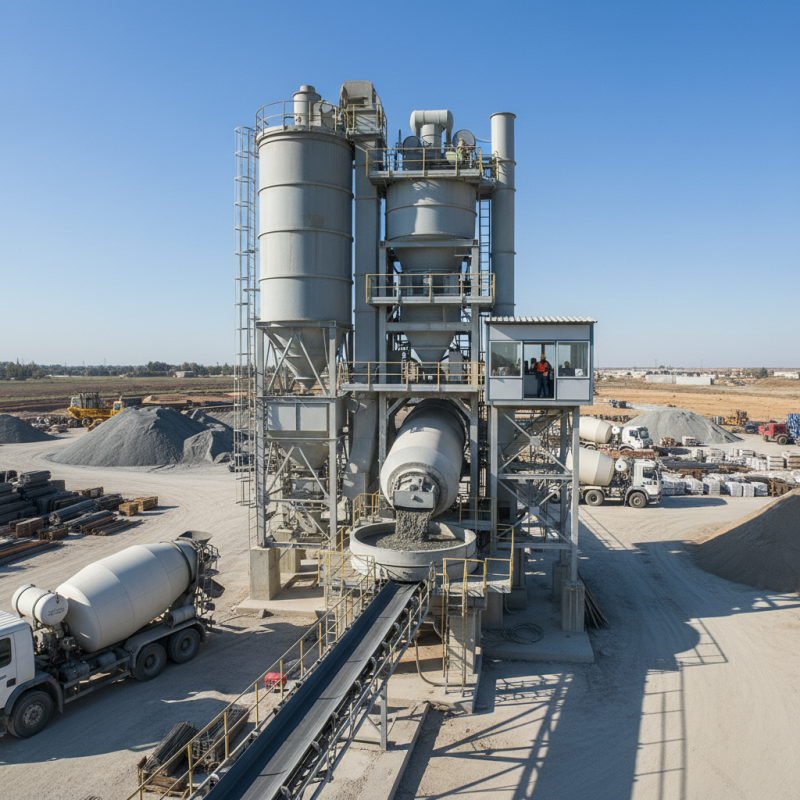
What is Batching Plant Cement and How Does It Work?
Batching Plant Cement plays a crucial role in modern construction. It ensures the precise mixing of cement, aggregates, and water. This accuracy is vital for building strong and durable structures. Many industries rely on batching plants for their efficiency and reliability.
Understanding how a batching plant operates requires attention to its components. These include hoppers, mixers, and control systems. Each part contributes to the overall functionality. Yet, we must remember that oversight can lead to inaccuracies. Miscalculations in material proportions can compromise project integrity.
Industry professionals emphasize the importance of regular maintenance. A well-maintained batching plant operates smoothly. However, small delays or errors can add up. These factors highlight the need for continuous improvement and training. All operators should engage in ongoing education. This proactive approach enhances skill and minimizes mistakes.
What is a Batching Plant for Cement Production?
A batching plant for cement production plays a vital role in construction and infrastructure development. It is an industrial facility designed to mix various ingredients to create concrete. The primary components include cement, water, aggregates, and additives. These materials are carefully measured and combined to ensure the right mixture and consistency.
The batching process typically involves several steps. First, raw materials are stored in silos and bins. When needed, they are transported to the mixing area. Accurate weighing is crucial during this phase. Even slight deviations can affect the strength and durability of the final product. A common mistake is underestimating the importance of precise measurements.
After the materials are mixed, the concrete is either poured into molds or transported to construction sites. It is vital to monitor the mix closely to maintain quality. This process often requires adjustments based on environmental factors, like humidity or temperature. In this way, a batching plant can produce uniform concrete while addressing specific project needs.
Key Components of a Cement Batching Plant
Cement batching plants are essential for producing concrete mixtures efficiently and accurately. Key components play a crucial role in this process. The aggregate storage system holds various materials like sand, gravel, and crushed stone. Proper segregation of these aggregates is vital for quality control. According to industry data, ensuring ideal moisture content in aggregates can significantly enhance concrete performance.
The cement silo is another critical element. It stores bulk cement, preventing contamination. Silos can hold thousands of tons of cement, enabling continuous production. A report from the International Cement Review highlights that proper maintenance of the silo can reduce operational costs by 15%.
The mixing unit is central to the batching process. This unit combines all components, including water, additives, and aggregates. Advanced mixing technologies can produce uniform concrete in less than a minute. However, achieving consistency in different environment conditions can be a challenge. Operators must monitor speed and mixing time closely. Small variations can lead to significant quality issues in the final product, illustrating the need for careful oversight in batching plant operations. The industry continually seeks innovations to improve efficiency and reliability.
The Process of Cement Batching: Step-by-Step
The cement batching process is crucial in construction. Accurate measurement is essential. Typically, operators rely on automated systems to weigh materials. For example, most batching plants require a precise mix ratio of 1:1.5:3 for cement, sand, and aggregate. This helps achieve the desired strength and consistency.
The actual process begins with aggregating raw materials. Cement, water, and aggregates are stored in silos or hoppers. Batching plants utilize weighing scales to ensure the right quantities are dispensed. Automatic systems can minimize human error, increasing efficiency. Data from the National Ready Mixed Concrete Association shows that automation can boost production rates by up to 20%.
After batching, the mixture is mixed in concrete trucks or stationary mixers. The mixing time is essential for uniformity. Studies have shown that insufficient mixing can lead to variability in strength. Continuous monitoring is essential, but not all plants achieve perfect consistency. Frequent calibrations and maintenance are necessary to ensure reliability. Balancing speed and accuracy presents ongoing challenges in the industry.
Cement Production Overview
This chart illustrates the cost distribution of different components involved in cement production. Raw materials account for the largest portion of the cost at 35%, followed by energy at 30%, labor at 15%, transportation and maintenance at 10% each. Understanding these costs can help improve the efficiency of the cement batching process.
Advantages of Using a Batching Plant for Cement
Batching plants play a crucial role in the construction industry, particularly in cement production. They mix various ingredients, including cement, water, and aggregates, to create a homogeneous mixture. This process not only ensures consistency in quality but also enhances efficiency during large-scale projects. When utilizing a batching plant, construction teams can significantly reduce the time spent on mixing materials on-site.
One of the key advantages of using a batching plant is the precision it offers. Each ingredient is measured accurately, leading to a consistent mixture that meets specified standards. This accuracy minimizes the risk of structural failures due to poor mixing. Additionally, batching plants can operate at larger scales, allowing more cement to be produced quickly. This is particularly beneficial for massive projects that require vast amounts of cement, saving time and labor costs.
While batching plants provide many benefits, they also require careful management. Operators need to monitor the mixing process closely to avoid inconsistencies. If ingredient proportions are slightly off, it can affect the final product's strength. Regular maintenance of the equipment is essential to ensure reliability. Despite these challenges, the advantages of using a batching plant often outweigh the drawbacks. With the right practices in place, they can deliver exceptional results in cement production.
Common Applications and Industries Using Batching Plants
Batching plants play a critical role in the construction and manufacturing industries. These facilities precisely mix and supply materials like cement, aggregates, and water. They ensure that the proportions are accurate, leading to a consistent quality of concrete. According to a report by the Global Concrete Market, the demand for batching plants is expected to grow by 5% annually over the next five years. This growth is linked to the booming construction sector worldwide.
Various industries rely heavily on batching plants. The construction industry is the most significant user, employing these plants for large-scale projects. Roads, bridges, and skyscrapers all utilize concrete produced through batching. Additionally, the precast concrete industry benefits from such plants, making products like pipes and panels with high precision. The industrial growth in regions like Asia-Pacific and North America further drives this reliance on automation and efficiency in batching plants.
However, not all batching plants operate at peak efficiency. Some may struggle with outdated technology or insufficient staff training. This can lead to inconsistencies in mix quality, affecting project outcomes. Industry experts recommend regular maintenance and employee training as key strategies for improvement. Addressing these challenges is crucial for maintaining competitiveness in this rapidly growing market.
What is Batching Plant Cement and How Does It Work? - Common Applications and Industries Using Batching Plants
| Application | Industry | Benefits | Cement Types Used |
| Ready-Mix Concrete Production | Construction | High precision in mix design | Portland Cement |
| Precast Concrete Manufacturing | Infrastructure | Cost-effective production | Blended Cement |
| Concrete Batching for Roads | Transportation | Customizable mix for durability | Rapid Hardening Cement |
| Shotcrete Applications | Mining & Tunneling | Speedy application | Sulfate-Resistant Cement |
| Stabilization of Soils | Environmental Engineering | Improved soil properties | Hydraulic Cement |