Why Capacitors Are the Key to Advanced Sensing Technologies
In the rapidly evolving field of advanced sensing technologies, the role of capacitors has emerged as a critical factor in enhancing sensor performance. Renowned industry expert Dr. Emily Tran, a leading researcher in smart materials and sensors, emphasizes the transformative impact of these components, stating, "Capacitors as sensors have the potential not only to improve accuracy but also to reduce the size and cost of sensing devices." This innovation is especially vital in applications ranging from environmental monitoring to wearable health devices, where precision and miniaturization are paramount.
The integration of capacitors as sensors allows for the direct measurement of physical changes such as pressure, temperature, and humidity with remarkable efficiency. By leveraging their intrinsic electrical properties, capacitors can respond to environmental stimuli, leading to advanced sensing capabilities that traditional sensors might not achieve. As industries continue to seek more compact and effective solutions, the exploration of capacitors as sensors will play a pivotal role in shaping the future of technology. With ongoing advancements in materials science, the potential for capacitors to revolutionize sensing applications is becoming increasingly clear.

Understanding the Basics of Capacitors in Sensing Technologies
Capacitors play an integral role in advanced sensing technologies by providing essential functionalities that enhance measurement accuracy and responsiveness. At their core, capacitors store electrical energy and can quickly release it, which is particularly useful in sensors that require rapid signal processing. This ability to store energy helps maintain a stable voltage across sensitive components, ensuring that readings remain consistent even under varying load conditions.
Understanding the basic principles of capacitors is crucial for optimizing their application in sensing devices. Capacitors consist of two conductive plates separated by an insulating material, which allows them to accumulate charge. In sensing technologies, capacitors are often used in circuits that detect changes in variables such as temperature, pressure, or proximity. By adjusting the capacitance value, engineers can tailor the sensor's response characteristics, making them more sensitive or robust depending on the specific application requirements. This adaptability is a key reason why capacitors remain foundational components in the evolution of sophisticated sensing technologies.
Exploring the Role of Capacitors in Enhancing Sensor Accuracy
Capacitors play a pivotal role in enhancing the accuracy of modern sensing technologies by stabilizing signal levels and filtering noise. In applications ranging from automotive sensors to medical diagnostics, capacitors help to maintain a consistent voltage supply, ensuring that signals from sensors are reliable and precise. For instance, a report from the International Journal of Electronics highlights that sensors utilizing capacitors can achieve up to a 30% improvement in measurement accuracy due to reduced signal interference and enhanced response times.
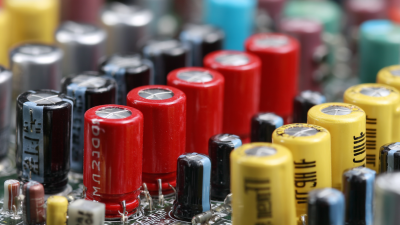
Moreover, advancements in capacitor technology, such as the development of ceramic and polymer capacitors, are fostering growth in sensor performance. According to a recent market analysis from Research and Markets, the global capacitor market is projected to reach $30 billion by 2025, driven primarily by its applications in sensor technologies. These innovations allow for smaller, lighter, and more efficient sensor designs, which contribute to a significant reduction in power consumption while improving overall responsiveness. As sensing technologies continue to evolve, the integral role of capacitors in achieving higher accuracy and reliability cannot be overstated.
Integrating Capacitors for Improved Signal Processing in Sensors
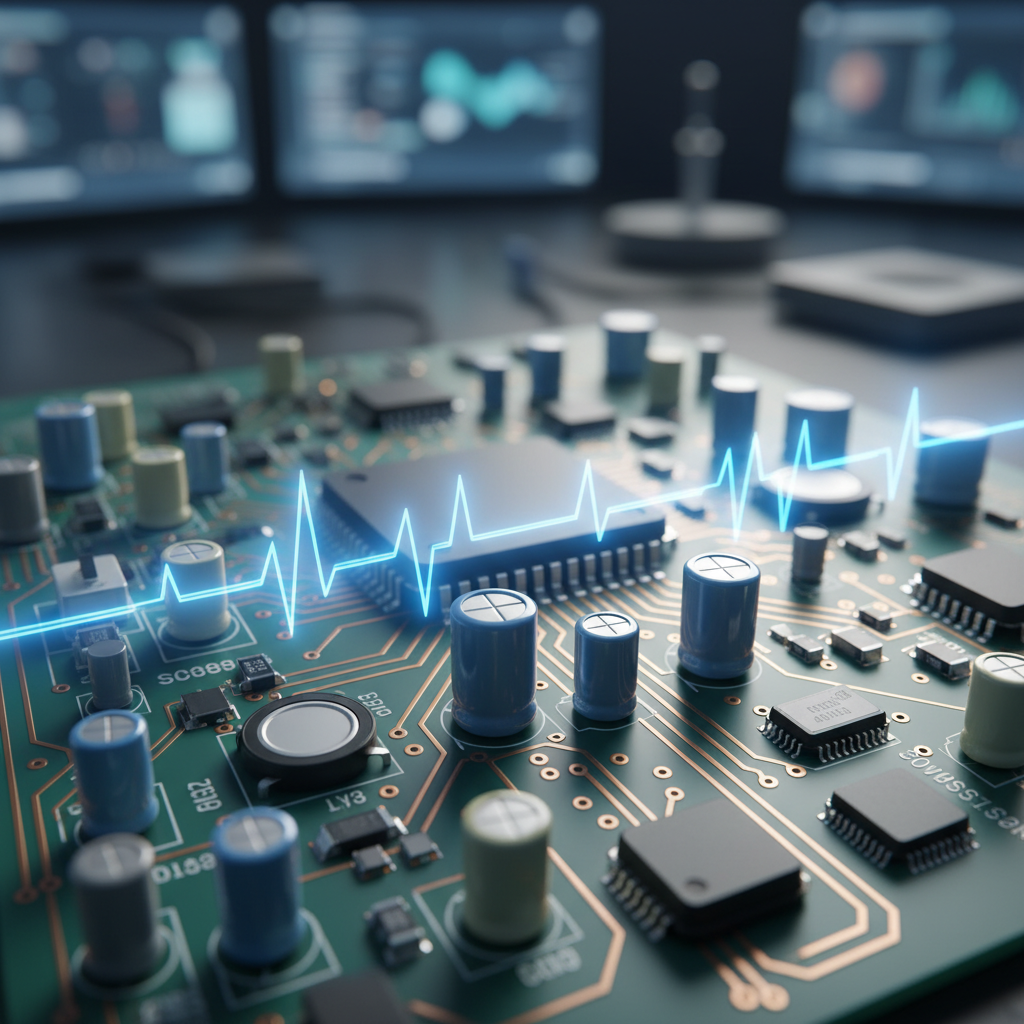
In recent years, the integration of capacitors into advanced sensing technologies has emerged as a crucial area of development, particularly for enhancing signal processing capabilities. According to a report by Markets and Markets, the global sensing market is projected to grow from $43.57 billion in 2020 to $92.74 billion by 2025, indicating a burgeoning demand for components that can optimize sensor performance. Capacitors, with their ability to filter and stabilize voltage fluctuations, play a vital role in ensuring the accuracy and reliability of sensor signals.
By incorporating high-performance capacitors, engineers can dramatically improve the signal-to-noise ratio in sensing applications, allowing for more precise measurements. For instance, ceramic capacitors are increasingly used in low-frequency applications due to their stability and low equivalent series resistance (ESR). The Technical University of Munich's recent studies highlighted that capacitors can reduce noise in digital signal processing by up to 30%, which is vital for applications ranging from medical diagnostics to automotive sensors. This advancement not only boosts sensor efficiency but also enables smarter diagnostic capabilities and real-time data processing that are essential in today's technology-driven landscape.
Innovative Applications of Capacitors in Next-Gen Sensing Devices
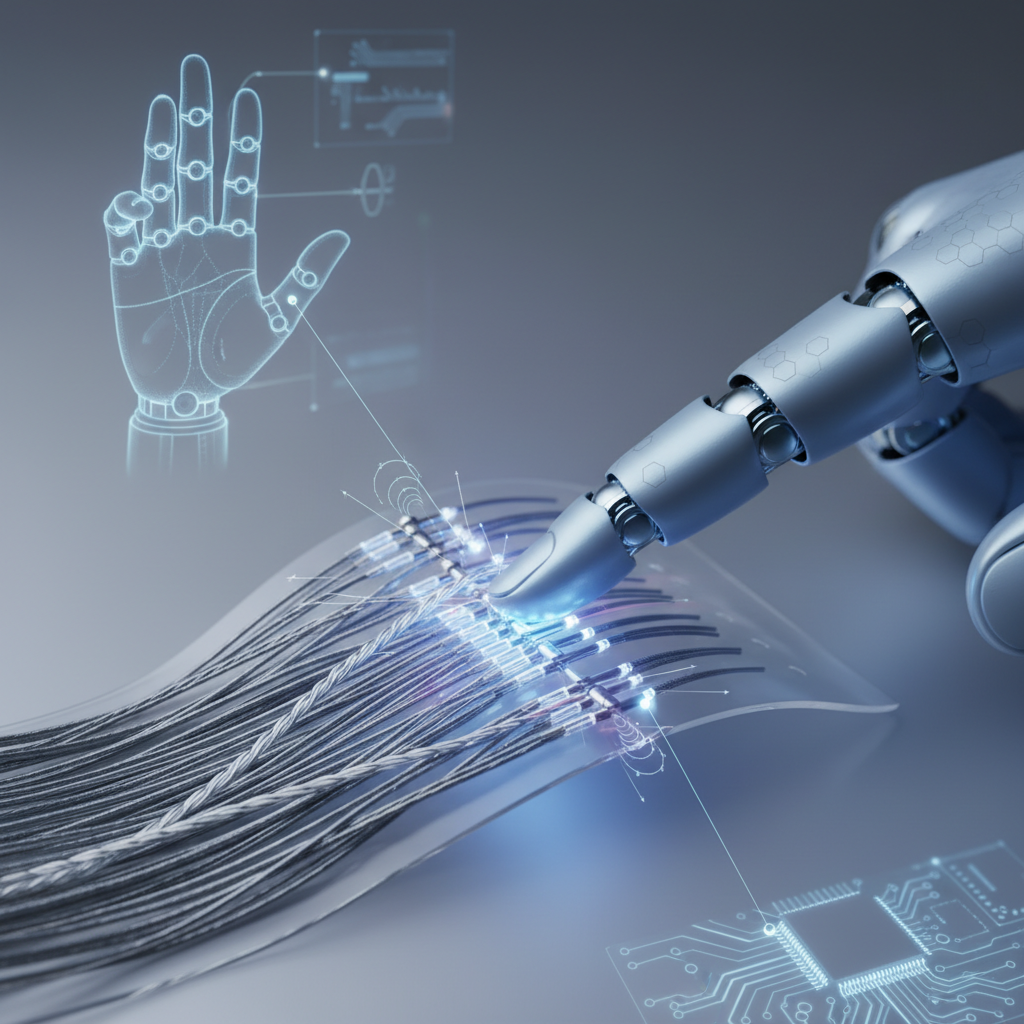
Innovative sensing technologies are rapidly evolving, and capacitors are playing a pivotal role in this advancement. The emergence of novel fiber-based flexible pressure sensors, like the TGTMW fiber, illustrates the potential of capacitors in enhancing tactile sensing capabilities. This fiber exhibits a unique resistance increase characteristic under external pressure, making it an ideal candidate for flexible pressure sensors that can be utilized in applications ranging from gesture control to robotics.
As we explore the innovative applications of capacitors, we encounter the integration of advanced materials in sensing devices. For instance, flexible electric heating fabrics are revolutionizing wearable technology by providing comfort and warmth while monitoring user conditions. These developments underscore the importance of capacitors in creating efficient and responsive sensing solutions.
**Tips:** When considering the implementation of capacitors in your sensing projects, focus on selecting materials that enhance both sensitivity and flexibility. Additionally, staying updated on emerging technologies related to capacitors can provide insights into new applications and innovations in the field. Embracing these advancements will help drive the future of sensing technologies.
Future Trends: Capacitor Technologies Shaping Smart Sensor Development
The advancement of smart sensor technologies is increasingly reliant on the innovations in capacitor technologies. As sensors evolve to meet the demands of applications ranging from industrial automation to health monitoring, capacitors enhance their performance by improving power efficiency, size, and responsiveness. The trend towards miniaturization means that capacitors must be smaller yet retain higher capacitance values and better energy density to support the functionality of compact smart sensors.
Moreover, emerging capacitor technologies, such as ceramic and organic capacitors, play a critical role in addressing challenges like temperature stability and frequency response. These developments not only facilitate the integration of multifunctionality in sensors but also ensure that they can operate under varying conditions with high precision. As the Internet of Things (IoT) expands, the demand for more sophisticated capacitors will likely lead to breakthroughs that enhance the capabilities of sensors in smart environments, enabling real-time data processing and improved connectivity.
Future Trends: Capacitor Technologies in Smart Sensor Development