Top Capacitors vs Resistors: Key Differences and Applications Explained
In the world of electronics, understanding the role of capacitors and resistors is essential. These two components serve different functions but are critical to circuit design. Capacitors store energy, while resistors limit the flow of electric current.
Capacitors resistors work together in many applications, from simple circuits to complex devices. For example, in audio equipment, capacitors smooth out signals, while resistors control volume levels. This interplay affects performance significantly.
However, choosing the right component isn’t always easy. Beginners might misjudge their roles. Sometimes, capacitors and resistors can be misunderstood, leading to inefficiencies. Understanding their differences and applications is crucial for optimal design and functionality.
Differences in Functionality: Capacitors vs Resistors
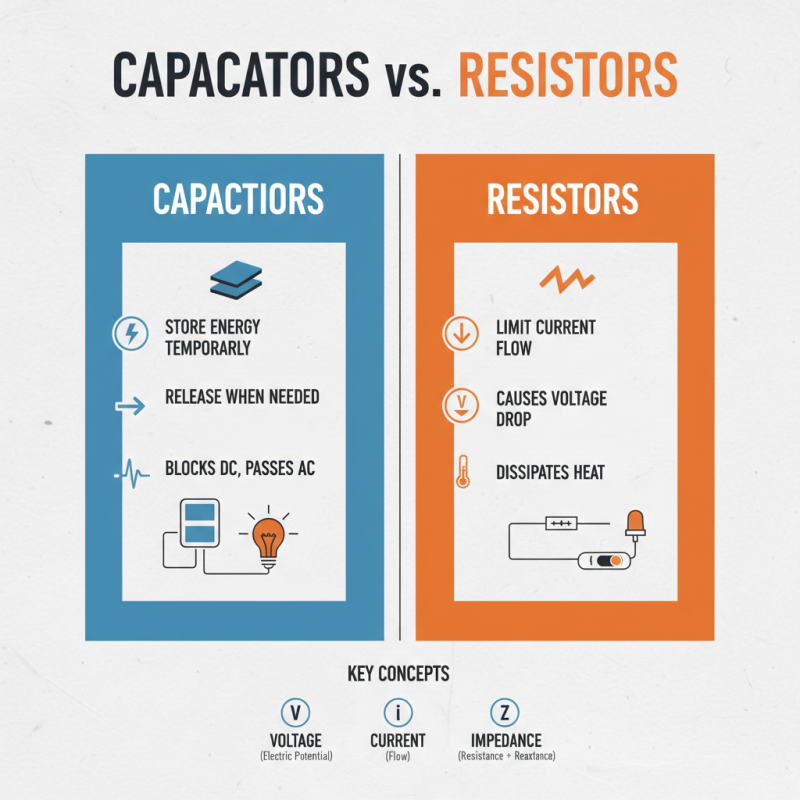
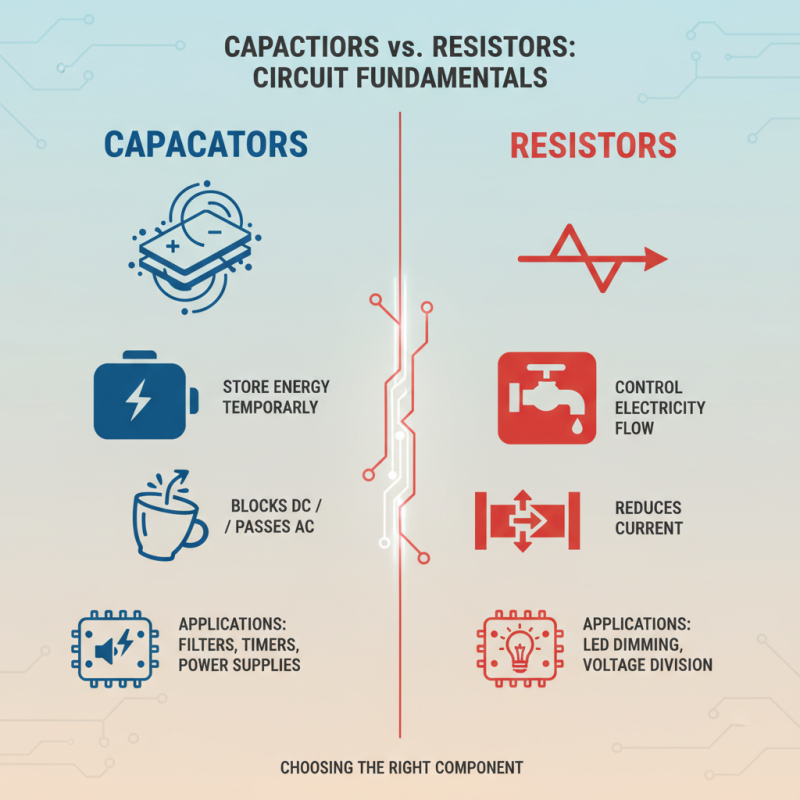
Capacitors and resistors serve distinct roles in electronic circuits. Capacitors store energy temporarily. They release it when needed. This function is crucial for tasks like smoothing voltage fluctuations. Resistors limit the current flow. They manage and control how much electricity passes through.
In practical terms, capacitors are often found in timing circuits. They help create a delay. Resistors, on the other hand, are common in voltage divider circuits. They balance the voltage across components. Each component plays a vital role, yet their functions differ greatly. Sometimes, choosing the wrong component can lead to circuit failures. Proper understanding is essential.
Tips: Always verify your circuit design. Oversizing a capacitor can lead to inefficiency. Undersizing a resistor might cause overheating. Simple mistakes can derail your project. Remember to test your circuits regularly. Small adjustments can yield significant improvements.
Top Capacitors vs Resistors: Key Differences and Applications
This chart illustrates the typical values for capacitors and resistors, highlighting their differences in functionality. Capacitors (measured in Farads) store electrical energy, while resistors (measured in Ohms) regulate the flow of electric current.
Electrical Characteristics: Voltage, Current, and Impedance Analysis
Capacitors and resistors serve different roles in electrical circuits. Understanding voltage, current, and impedance helps clarify their functions. Capacitors store energy temporarily. They release it when needed. Resistors, on the other hand, limit current flow. This causes voltage to drop across them.
Impedance is key in analyzing circuit behavior. For capacitors, it decreases with increased frequency. This means they can effectively block low-frequency signals while allowing high-frequency signals. Resistors maintain a constant impedance. They do not change with frequency. This difference can impact circuit performance significantly.
**Tip:** When designing circuits, consider the frequency of signals. This affects how capacitors and resistors interact.
Think about using capacitors to filter signals. They can smooth out voltage fluctuations. But resistors introduce heat and energy loss. Consider this carefully during your design phase.
**Tip:** Experiment with different combinations. Mixing capacitors and resistors can yield unexpected results. You might encounter performance issues, prompting deeper reflections on your circuit choices. Remember, practical testing can reveal more than theoretical calculations.
Applications in Circuits: Where Capacitors and Resistors Are Used
Capacitors and resistors play critical roles in electronic circuits. Capacitors store and release energy, while resistors limit current flow. Understanding their applications enhances circuit design and functionality.
In audio equipment, capacitors filter out unwanted noise. They help stabilize power supplies. Resistors are essential for controlling volumes, preventing damage, and ensuring safety. Recent industry reports estimate a 15% increase in capacitor usage in consumer electronics, reflecting their rise in popularity.
Tips: Always choose the right capacitor type for your circuit. Consider voltage ratings and tolerance levels. For resistors, evaluate power ratings to avoid overheating.
Capacitors find applications in timing circuits, allowing precise control. Resistors appear in sensor circuits, providing important data readings. An imbalance can lead to inefficiency. Keep an eye on component quality. Some components fall short of expected standards.
Top Capacitors vs Resistors: Key Differences and Applications Explained
| Component |
Key Differences |
Applications |
| Capacitor |
Stores electrical energy in an electric field |
Used in timing circuits, filters, coupling, and decoupling applications |
| Resistor |
Resists the flow of electric current and dissipates energy as heat |
Used in voltage dividers, current limiting, and biasing applications |
| Capacitor |
Can charge and discharge quickly |
Found in power supply circuits, smoothing out fluctuations |
| Resistor |
Maintains a constant resistance regardless of voltage |
Commonly used in audio equipment to control volume and tone |
| Capacitor |
Used for energy storage in power applications |
Essential in electric vehicles for maintaining power |
| Resistor |
Provides thermal stability in a circuit |
Frequently used in sensor circuits and control systems |
Behavior in AC and DC Circuits: Insights and Comparisons
In AC and DC circuits, capacitors and resistors behave quite differently. Capacitors store electrical energy by accumulating charge. They release this energy when needed. This characteristic makes capacitors ideal for smoothing out voltage fluctuations in DC applications. A report from the International Journal of Electronics highlighted that capacitors can improve power factor by 20% in industrial settings.
On the other hand, resistors dissipate energy as heat. They limit the flow of current through a circuit. In AC systems, resistors affect the phase relationship between voltage and current. A study conducted by IEEE noted that using resistors can lead to significant power loss, with average heat dissipation rates reaching above 2 watts per resistor.
In practical applications, choosing between these components isn’t always straightforward. Capacitors might malfunction if exposed to excessive voltage. Resistors can also fail, especially under high loads. Both components can impact circuit efficiency. It’s essential to analyze the specific needs of a project, as improper selection can lead to poor performance and wasted energy. Understanding these behaviors in different circuit types is crucial for effective design.
Selection Criteria: Choosing Between Capacitors and Resistors
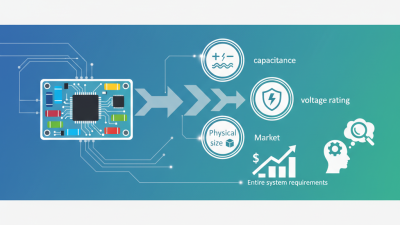
When choosing between capacitors and resistors, it's vital to consider their unique functions. Capacitors store energy temporarily, while resistors control the flow of electricity. These differences significantly impact their applications in circuits.
Understanding voltage and current requirements is crucial. Capacitors are great for smoothing out voltage fluctuations, like in power supplies. Resistors, on the other hand, are essential for limiting current. This distinction can guide your selection process effectively.
**Tips**: Always match the component's ratings to your circuit specifications. Pay close attention to tolerance levels, especially in critical applications. Experimenting with different values can lead to unexpected results.
Choosing the right component can be challenging. It's essential to evaluate the circuit's overall behavior. Sometimes, adding a resistor might create more heat than you expect. Seek practical insights and test configurations thoroughly before settling on a final design.