Why Choose Dry Type Transformers for Your Next Project?
When embarking on a new electrical project, the choice of transformer technology plays a critical role. Among the options available, Dry-Type Transformers stand out due to their unique advantages. They offer safety and environmental benefits that promise reliability. These transformers are ideal for various applications, from commercial buildings to industrial facilities.
Dry-Type Transformers require minimal maintenance, which can be a significant advantage. Their design eliminates the risk of oil spills, making them safer for indoor use. This factor contributes to their growing popularity in urban settings. Real-world experiences demonstrate how their application has led to cost savings over time.
However, it’s important to consider the initial investment. Dry-Type Transformers can be more expensive upfront compared to traditional oil-filled models. This aspect needs careful evaluation. Understanding your project’s specific needs will ensure the best choice. Knowledgeable professionals highlight the long-term benefits as worth the extra cost. Ultimately, weighing both immediate and future gains will lead to a well-informed decision.
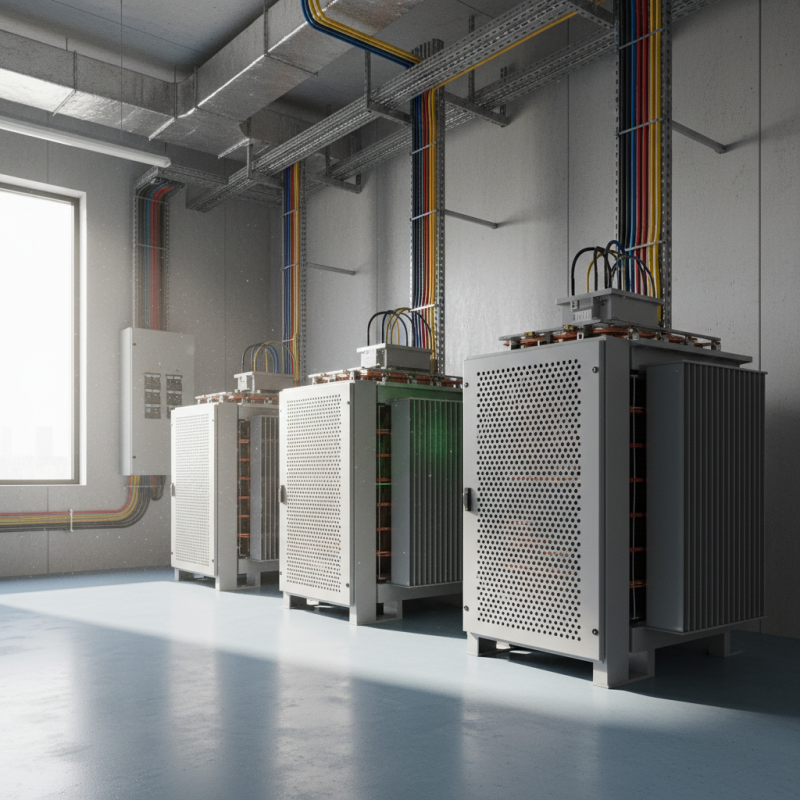
Benefits of Using Dry Type Transformers in Modern Electrical Systems
Dry type transformers offer several advantages for modern electrical systems. One notable benefit is their enhanced safety. These transformers use air as an insulating medium, eliminating the risk of oil leaks. According to a report by the International Electrotechnical Commission, over 30% of transformer failures can be attributed to insulation breakdown. Switching to dry type could significantly reduce these risks.
Efficiency is another key aspect. Dry type transformers typically exhibit lower energy losses compared to oil-filled transformers. A study by the U.S. Department of Energy indicates that dry type transformers can achieve efficiency levels above 98%. This improvement not only saves energy but also cuts long-term operating costs.
Moreover, their compact size is beneficial for space-constrained projects. They can be installed indoors, reducing the need for external transformer stations. However, the initial investment can be higher than traditional transformers. Not everyone may weigh this cost against long-term savings effectively. There is an ongoing debate among engineers regarding the best applications for dry type transformers, highlighting the importance of choice in design.
Key Applications of Dry Type Transformers in Various Industries
Dry type transformers are increasingly favored in various industries due to their numerous advantages. These transformers are often used in urban environments where safety and performance are paramount. Built without liquid insulation, they reduce the risk of fire hazards. Their ability to withstand harsh conditions makes them ideal for outdoor applications, such as renewable energy projects.
One of the key applications of dry type transformers is in commercial buildings. These transformers provide stable voltage levels, ensuring reliable power distribution. They are also commonly used in manufacturing facilities. The high efficiency of dry type transformers supports industrial processes with minimal downtime. This reliability is crucial in environments where even a short interruption can lead to significant losses.
In the healthcare sector, dry type transformers play a vital role in powering medical equipment. They ensure a clean power supply, minimizing interference with sensitive devices. Additionally, data centers rely on these transformers to maintain optimal performance. However, challenges exist, such as the need for adequate ventilation and cooling to ensure longevity. Proper installation and maintenance are necessary for optimal functionality, highlighting a space for improvement in project planning.
Why Choose Dry Type Transformers for Your Next Project? - Key Applications of Dry Type Transformers in Various Industries
| Industry | Key Applications | Advantages of Dry Type Transformers |
| Industrial Manufacturing | Power supply for heavy machinery and equipment | Lower maintenance costs and enhanced safety. |
| Renewable Energy | Solar and wind energy conversion | Environmentally friendly and reduced risk of fire. |
| Commercial Buildings | HVAC systems and lighting | Compact size and efficient cooling capabilities. |
| Transportation | Rail and metro systems | Reliable performance under harsh conditions. |
| Data Centers | Power for IT equipment | High efficiency and lower heat generation. |
| Healthcare | Power supply for medical equipment | Increased reliability and reduced electromagnetic interference. |
Safety Advantages of Dry Type Transformers Over Oil-Immersed Alternatives
When selecting transformers for your project, consider the unique safety advantages of dry type transformers. Unlike oil-immersed alternatives, dry type transformers use air as a cooling medium. This significantly reduces the risk of fire hazards. There is no flammable oil inside, which decreases the likelihood of explosive failures.
In addition to fire safety, dry type transformers are also resistant to environmental hazards. They perform well in harsh conditions. This makes them ideal for indoor environments, especially in spaces where safety is a priority, such as schools and hospitals. Their design minimizes the risk of leaks or spills, contributing to overall site safety.
Tip: Regular inspections can enhance the life of your transformers. Check for dust accumulation and ensure proper ventilation.
While dry type transformers offer many advantages, they can be more expensive initially. This might lead to concerns about budget constraints. However, their longevity and reduced maintenance needs can offset these costs over time.
Tip: Consider the long-term benefits when budgeting for transformers. Evaluate potential savings due to lower maintenance and safety compliance costs.
Safety Advantages of Dry Type Transformers Over Oil-Immersed Alternatives
Cost-Effectiveness and Lifespan of Dry Type Transformers Compared to Others
When considering transformer options for your next project, dry type transformers stand out in terms of cost-effectiveness and lifespan. According to industry reports, dry type transformers can operate for over 30 years with minimal maintenance. Unlike traditional transformers, which may require more frequent repairs, dry type units are designed to endure harsh environments.
The initial investment in dry type transformers can be higher, but their long-term savings are significant. They typically consume less energy and have lower thermal losses. Data shows that energy efficiency can improve by 5-10% compared to oil-filled transformers. This not only saves on operational costs but also supports sustainability efforts in reducing carbon footprints.
Tips: When selecting transformers, evaluate the total cost of ownership. Consider installation, maintenance, and energy consumption. Additionally, prioritize models with proven reliability in your specific application. Make use of simulation tools to assess the performance over time. Choosing wisely can lead to enhanced efficiency and lower operational risks.
Environmental Impact and Sustainability Considerations of Dry Type Transformers
Dry type transformers are gaining traction in various applications due to their significant environmental benefits. Unlike oil-filled transformers, dry type models eliminate the risk of leakage and soil contamination. According to a report from the U.S. Department of Energy, dry type transformers can reduce greenhouse gas emissions by over 20% when implemented in large-scale energy systems. This statistic highlights their capability to foster cleaner energy production.
In addition to reducing emissions, dry type transformers are often constructed from recyclable materials. This allows for a lower carbon footprint across their lifecycle. A study published by the International Electrotechnical Commission noted that the materials used in dry type transformers contribute to sustainability goals.
Despite these advantages, it's essential to reflect on their thermal management challenges. They may require increased ventilation, leading to higher infrastructure costs. Proper installation and maintenance are critical for optimizing their performance and sustainability.
Efforts are underway to enhance the lifetime and efficiency of dry type transformers further. Research by the Electric Power Research Institute underscores the need for continuous development in this area. As the industry evolves, these transformers may become even more integral to the future of energy systems, but hurdles remain. Formulating strategies to address their limitations, like temperature control, will be paramount in ensuring they meet the environmental standards expected in upcoming projects.