How to Choose the Right Passive Electronic Components?
In today's fast-paced electronics market, the selection of passive electronic components is critical. Industry reports show that the market for these components is projected to grow significantly, reaching $50 billion by 2025. These components, like resistors and capacitors, play essential roles in circuit design. Choosing the right ones can enhance device performance and reliability.
Expert Jane Smith, a leading figure in passive components manufacturing, emphasizes, "Quality components lead to better overall system efficiency." Her insight highlights the importance of precision in selection. However, challenges persist. Engineers often face difficulties in sourcing reliable suppliers or understanding the specific requirements for their applications.
Each decision can impact a project’s success. Understanding specifications, tolerances, and costs is complex. Often, engineers may overlook details or rush the selection process, leading to potential issues. It's crucial to carefully evaluate all options. The stakes are high, as the right passive electronic components ensure not only product functionality but also longevity in a competitive landscape.
Understanding the Role of Passive Electronic Components in Circuits
Passive electronic components are essential in circuits. They do not amplify signals but instead, help shape and manage them. Understanding their role is vital for any electronics designer.
Resistors, capacitors, and inductors are the most common passive components. Resistors limit current flow. Capacitors store energy, offering timing adjustments in circuits. Inductors manage magnetic fields, influencing how signals move. Each component serves a specific purpose, impacting the overall circuit performance.
Tips: Always consider the tolerances of components. Variability can affect circuit behavior. It’s also wise to experiment with different values. This exploration can lead to unexpected findings. Sometimes, a resistor with a slight difference in resistance can change functionality. Calculate power ratings carefully. An underrated component can fail under load.
Choosing the right passive component requires both knowledge and intuition. There’s no one-size-fits-all solution. Sometimes, you might feel uncertain about which values to use. Trusting your instincts can lead to beneficial discoveries. Reflect on what works and what doesn't. Each project teaches new lessons.
Key Specifications to Consider When Selecting Passive Components
When selecting passive electronic components, key specifications are crucial. These components include resistors, capacitors, and inductors. They impact overall circuit performance. In 2021, the global passive components market was valued at approximately $26 billion, with a projected growth rate of over 6% annually. This trend signifies their increasing importance.
One critical specification to consider is tolerance. This refers to how much a component's value can deviate from its nominal value. A tighter tolerance results in a more precise performance but often comes at a higher cost. Temperature coefficient is another vital factor. It indicates how a component reacts to temperature changes. A wrong choice here could lead to circuit failure under specific conditions.
Tips: Always check the voltage ratings. Underestimating them can cause components to fail. Pay attention to power ratings as well. They show how much power a component can handle. Choosing the correct type can reduce heat and improve longevity.
Another aspect to reflect on is the footprint of the components. Smaller components save space but may offer limited performance. Balancing size, performance, and cost is essential. Sometimes, compromises must be made based on design needs.
Evaluating the Quality and Reliability of Passive Electronic Components
When selecting passive electronic components, quality and reliability are crucial. These components, including resistors, capacitors, and inductors, play a significant role in circuit performance.
Choosing the wrong component can lead to failures.
Evaluating quality involves checking specifications. Look for tolerance, temperature coefficient, and lifespan. Not all manufacturers provide complete details. It’s essential to assess their documentation. Checking reviews and industry feedback can help gauge reliability too.
Sometimes, components may fail unexpectedly. A wrong choice could lead to circuit malfunctions. Always test components under real conditions to ensure they meet expectations. Observing their performance in simulations can be helpful, but real-world testing is critical. Reliability is not just about numbers; it’s about how components behave under various conditions.
Comparing Different Types of Passive Components: Capacitors, Resistors, and Inductors
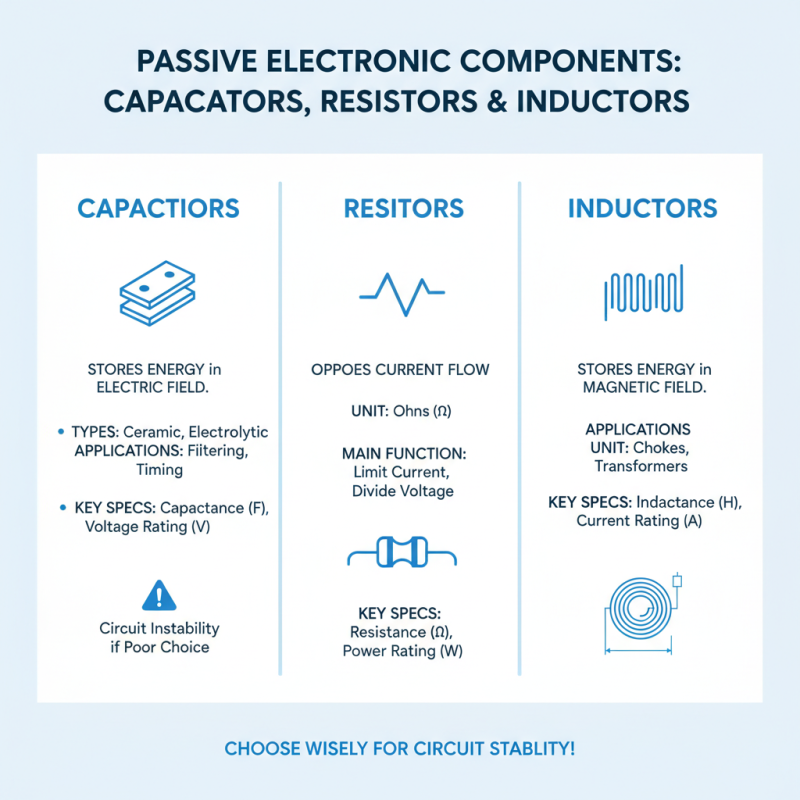
When selecting passive electronic components, understanding the differences between capacitors, resistors, and inductors is crucial. Capacitors store energy in an electric field. They come in various types, including ceramic and electrolytic. Their values affect filtering and timing applications. A poor choice may lead to instability in circuits. It's essential to know the voltage ratings and capacitance values before making decisions.
Resistors limit current flow. They play a key role in controlling voltage and ensuring stable circuit operation. Think about resistance levels and tolerances. Choosing the wrong resistor can alter circuit performance significantly. Consider the power rating too. If the resistor overheats, it can fail, potentially damaging nearby components.
Inductors are often overlooked. They store energy in a magnetic field. Their behavior is frequency-dependent, affecting signal integrity. Inductor values must match application requirements closely. If the inductor is too large, it can create unwanted resistance. Understanding the inductance is vital. Each component has its strengths and weaknesses. Reflect on which combination yields the best circuit performance.
Industry Trends and Innovations in Passive Component Selection Criteria
Choosing the right passive electronic components involves understanding current industry trends and innovations. The market is evolving rapidly. Manufacturers are focusing on sustainability. They aim for eco-friendly materials and efficient designs. This shift impacts component selection significantly.
With the rise of IoT, passive components need to meet specific performance criteria. Smaller sizes and higher efficiency rates are demanded. Yet, selecting these components can be challenging. Many engineers still rely on outdated specifications. This can lead to mismatched applications and potential failures.
New technologies like AI are entering the selection process. They analyze data to recommend optimal options. Still, human judgment remains essential. Engineers must balance innovation with practicality. Understanding your application deeply is crucial. There's no one-size-fits-all solution. Embracing these trends could lead to improvements, but staying aware of pitfalls is just as important.