Essential Tips for Understanding Electronic Sensors Today?
In today’s world, electronic sensors have become essential components of various technologies. These devices convert physical phenomena into measurable signals. They play significant roles in industries like automotive, healthcare, and manufacturing.
Understanding electronic sensors is vital for anyone working with technology. However, many struggle to grasp their functions. Sensors come in various types, such as temperature, pressure, and motion sensors. Each type serves a unique purpose, yet they all rely on basic principles of physics and engineering.
Despite their importance, misconceptions about electronic sensors abound. Some believe they are infallible, but like any technology, they can fail. It’s crucial to recognize their limitations. Reflecting on how we use and interpret data from electronic sensors can lead to better outcomes in project development and innovation.
Types of Electronic Sensors and Their Applications
Electronic sensors have become vital in various fields. They convert physical properties into signals for data processing. Knowing their types helps in selecting the right sensor for specific applications.
One common type is the temperature sensor. These sensors monitor temperatures in HVAC systems and industrial processes. Pressure sensors are used in automotive and medical devices. They measure pressure levels accurately to ensure systems operate within safe limits.
There are also motion sensors, which detect movement. These are essential in security systems and smart home technologies.
Despite their advantages, some challenges exist. Sensor accuracy can fluctuate due to environmental changes. Reliability is crucial, yet many sensors face limitations in extreme conditions. It's important to understand the context in which a sensor operates. Sometimes, potential applications are overlooked. There is always room for improvement in sensor technology.
Basic Principles of How Electronic Sensors Work
Electronic sensors are vital in our technology-driven world. They detect changes in the environment and convert them into readable signals. This process involves various principles that allow sensors to function effectively. Understanding these principles can enhance your knowledge and use of sensors in different applications.
One basic principle is the piezoelectric effect. This phenomenon occurs when certain materials generate an electric charge in response to mechanical stress. It’s widely used in microphones and pressure sensors. Another key principle is resistive sensing, where the resistance changes in response to environmental factors. This method is often utilized in temperature sensors, which are crucial in monitoring climate conditions.
Here are some tips to consider when working with electronic sensors. Always check the specifications for each sensor. Knowing its range and limitations helps in making better decisions. Additionally, testing the sensors in real-time scenarios can reveal unexpected behaviors. Don’t overlook calibration; it’s essential for accurate readings. Lastly, stay curious and keep learning about new sensing technologies. Each discovery can open doors to innovative applications.
Essential Tips for Understanding Electronic Sensors Today
| Sensor Type |
Principle of Operation |
Common Applications |
Key Advantages |
| Temperature Sensor |
Measures temperature through resistance change |
HVAC systems, automotive, food storage |
High accuracy, wide range of measurement |
| Pressure Sensor |
Uses piezoresistive effect to measure pressure |
Aerospace, medical devices, weather stations |
High sensitivity, compact design |
| Light Sensor |
Detects light intensity via photoconductivity |
Camera autofocus, solar panels, smartphones |
Fast response time, low power consumption |
| Motion Sensor |
Detects movement through infrared or microwave signals |
Security systems, automatic lighting, gaming |
Enhanced security, energy efficiency |
| Gas Sensor |
Works based on gas concentration affecting conductivity |
Air quality monitoring, industrial safety |
Real-time monitoring, high sensitivity |
Key Characteristics and Specifications of Sensors
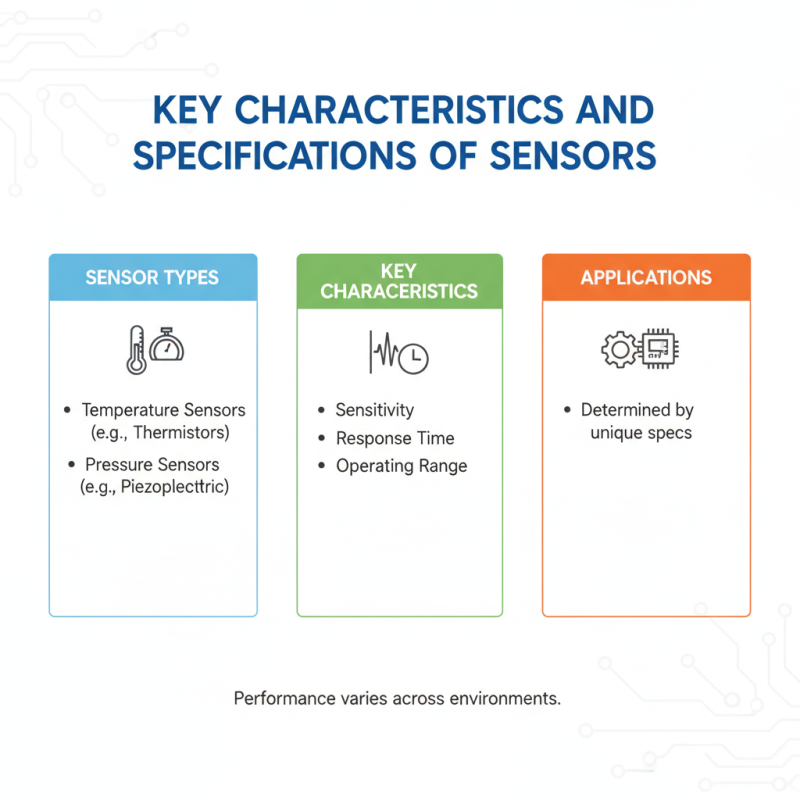
When exploring electronic sensors, understanding their key characteristics is vital. Different types of sensors have distinct specifications that determine their applications. For instance, a temperature sensor might use thermistors, while pressure sensors may rely on piezoelectric materials. Each type has unique sensitivities, response times, and operating ranges, affecting performance in various environments.
Another essential characteristic is the sensor's accuracy. Different sensors have different degrees of precision. Some offer high accuracy, while others are adequate for general use. Users should consider the acceptable error margins for their specific needs. Additionally, understanding the output type is crucial. Analog and digital outputs serve different purposes. Knowing these details helps in choosing the right sensor for an application.
It's easy to overlook certain characteristics when selecting sensors. Users may focus heavily on one specification and neglect others. For example, a sensor with good accuracy might not be suitable if it cannot operate within the desired temperature range. Paying close attention to each characteristic can save time and resources in the long run. Making informed choices about sensors ensures better performance and reliability in projects.
Challenges in Sensor Integration and Performance
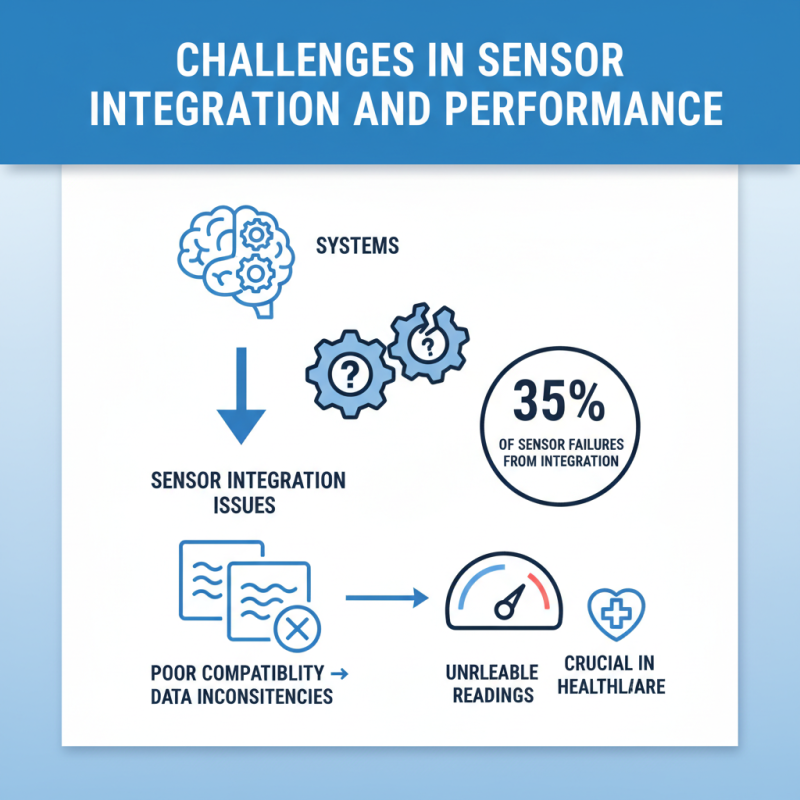
Integrating electronic sensors into systems presents several challenges. These challenges can impact overall performance significantly. According to a recent report, about 35% of sensor failures stem from integration issues. Poor compatibility among sensors can lead to data inconsistencies. This often results in unreliable readings, crucial in fields like healthcare.
Another major challenge is environmental interference. Many sensors are sensitive to temperature, humidity, and electromagnetic fields. Data from industry surveys indicate that around 50% of manufacturers report performance degradation due to environmental factors. For instance, a sensor working in a high-humidity area may struggle to deliver accurate readings.
In addition, calibration is often overlooked. Improper calibration can lead to systematic errors. Some studies show that nearly 40% of sensor applications fail to undergo thorough calibration processes. As a result, one might find discrepancies between expected and actual performance. Recognizing these integration challenges is key to improving the reliability and accuracy of electronic sensors in various applications.
Future Trends in Electronic Sensor Technology and Innovation
The future of electronic sensor technology is bright and filled with innovation. As industries evolve, sensors become smarter. For instance, advanced materials are emerging that improve sensitivity and durability. These materials could lead to more accurate readings in various applications, from healthcare to environmental monitoring.
Integration with artificial intelligence is another trend. Sensors that process data on-site can reduce latency. This allows for quicker responses in critical situations. However, the challenge remains in ensuring that these systems are secure. Cybersecurity risks grow alongside sensor sophistication. Stakeholders must prioritize safety.
Moreover, the miniaturization of sensors opens doors to the Internet of Things (IoT). Tiny sensors can be embedded in everyday objects, creating smart environments. Yet, there are questions about data privacy. Users may not always understand how information is collected and used. As we embrace these innovations, reflection on ethics and safety is essential.
Trends in Electronic Sensor Technology
This bar chart illustrates the anticipated market growth rates for various types of electronic sensors. As technology evolves, sensors such as temperature and light sensors are expected to see significant growth, reflecting their increasing applications in smart devices and industries. This indicates a promising future for sensor technology and its innovations.