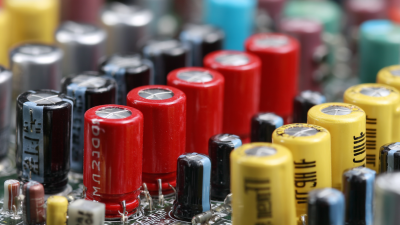
Understanding passive electronic components is essential in today's technology-driven landscape. According to a report by MarketsandMarkets, the global passive components market is expected to reach $49.8 billion by 2026, reflecting a robust growth trend fueled by increasing demand in various industries. This development underscores the importance of mastering the fundamentals of these components.
John A. Hennessey, a leading expert in electronic components, emphasized, "The efficiency of any electronic device hinges on a thorough understanding of passive components." His insights highlight how crucial these elements are in circuit design and functionality. Capacitors, resistors, and inductors are foundational building blocks; their roles cannot be overstated, and yet they often receive less attention than their active counterparts.
Many enthusiasts and professionals encounter difficulties in grasping the nuances of passive components. For instance, the impact of capacitance in filtering applications can be misunderstood. This can lead to design flaws that compromise performance. Moreover, the endless variations in specifications can become overwhelming. Understanding these components requires deliberate study, patience, and sometimes trial and error. The journey may be challenging, but the rewards are significant for those who persevere.
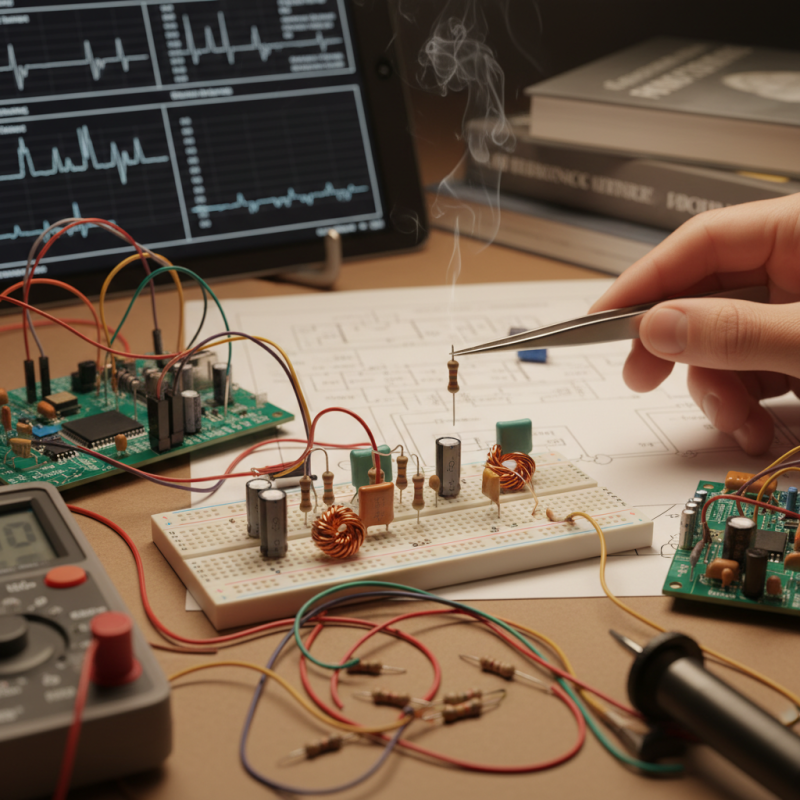
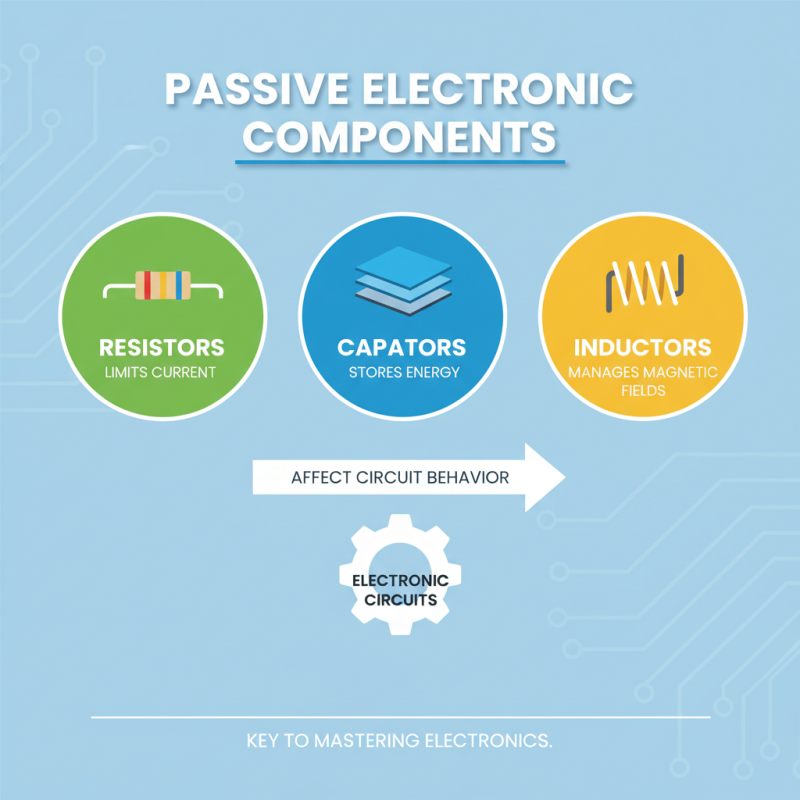
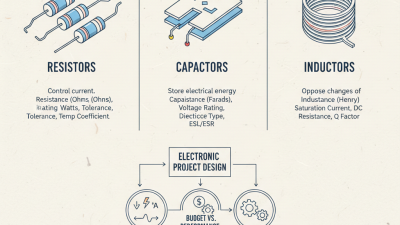
Passive electronic components play a vital role in various electronic circuits. They include resistors, capacitors, and inductors. Each type has unique properties that affect circuit behavior. Resistors limit current flow, capacitors store energy, and inductors manage magnetic fields. Understanding these components is key to mastering electronics.
Resistors are perhaps the simplest components. They convert electrical energy into heat. Their value is measured in ohms. This value affects how much current flows through them. Capacitors, on the other hand, have two conductive plates. They store electrical energy. Their ability to store energy is measured in farads. A common misconception is that all capacitors have the same effect. In reality, different types have different applications.
Inductors consist of wire wound around a core. They create a magnetic field when current flows through them. This field opposes changes in current. Many new learners struggle to grasp this concept. They often overlook how these fields can affect nearby components. Understanding passive components requires practice and reflection on circuit design. Each component’s interaction can lead to unexpected results.
Passive electronic components are crucial in electronic circuits. They do not require external power to operate. Common types include resistors, capacitors, and inductors. Each serves unique functions that are vital for circuit performance.
Resistors limit current flow. They come in various values and sizes. A resistor's job may seem simple, but choosing the wrong value can lead to circuit failure. Capacitors store and release electrical energy. They smooth out voltage fluctuations. Different types of capacitors have distinct characteristics. Inductors store energy in a magnetic field. They resist changes in current and are often used in filtering applications.
Understanding these components can be tricky. Their behavior can vary under different conditions. For example, temperature can affect resistance. It's essential to consider these factors when designing circuits. Mistakes in selecting passive components can cause unwanted results. Grasping their functions takes time and practice, but this knowledge is invaluable in electronics.
| Component Type | Function | Key Characteristics | Common Applications |
|---|---|---|---|
| Resistor | Limits current flow and divides voltages | Value (Ohms), tolerance, power rating | Voltage dividers, current limiting, pull-up/down |
| Capacitor | Stores electrical energy temporarily | Capacitance (Farads), voltage rating, ESR | Coupling, decoupling, timing circuits |
| Inductor | Stores energy in a magnetic field | Inductance (Henries), current rating, DCR | Filters, energy storage, oscillators |
| Diodes (Zener) | Allows current to flow in one direction, voltage regulation | Forward voltage, reverse breakdown voltage | Voltage regulation, reference voltage |
| Potentiometer | Adjusts voltage levels | Resistance (Ohms), taper type (linear/logarithmic) | Volume controls, adjustable resistors |
| Transformer | Transfers electrical energy between circuits through induction | Turns ratio, power rating, frequency range | Power distribution, isolation, voltage conversion |
| Ferrite Bead | Suppress high-frequency noise | Impedance at frequency, current rating | Signal integrity, RF applications |
| Varistor | Protects against voltage spikes | Voltage rating, clamping voltage | Surge protection, transient voltage suppression |
| Crystal Oscillator | Provides a stable clock signal | Frequency, load capacitance | Timing circuits, frequency generation |
Passive electronic components play a crucial role in modern electronics. Understanding their key characteristics is essential for effective design. These components include resistors, capacitors, and inductors. Each type has unique properties that affect circuit behavior.
Resistors limit current flow and dissipate energy as heat. Their resistance values are measured in ohms and can vary significantly. The tolerance level, often around 5% to 10%, shows how much the actual value may differ from the stated value.
Capacitors store and release energy. Their capacitance, measured in farads, can range from picofarads to microfarads. However, their performance may degrade over time, influenced by temperature and voltage.
Inductors, which store energy in magnetic fields, exhibit behavior dependent on their inductance values and core materials.
Recent industry reports indicate that the global market for passive components is expected to grow by 5% annually. Despite this growth, engineers often overlook the subtle nuances of these components. For instance, selecting capacitors without considering equivalent series resistance can lead to inefficiencies. Similarly, failing to account for parasitic capacitance in inductors can introduce unpredictable behavior in high-frequency applications. Understanding these details is vital for successful electronics design.
Impedance and reactance are crucial concepts in electronics. They play a vital role in the behavior of passive components. Impedance is the total opposition to current flow in an AC circuit. It combines resistance and reactance. Reactance is the opposition that inductors and capacitors present. It varies with frequency. Understanding these concepts helps in circuit design and analysis.
Reactance can be capacitive or inductive. Capacitive reactance decreases with increasing frequency. This means capacitors allow higher frequency signals to pass more easily. In contrast, inductive reactance increases with frequency. Inductors resist high-frequency signals. Balancing these components in a circuit can be challenging. You must consider the operational frequency and intended application.
Many newcomers overlook these relationships. They might miscalculate component values. This can lead to unexpected behaviors in circuits. A good practice is to simulate circuits before finalizing designs. Each component's role should be clear. Experimentation helps clarify these concepts over time. Understanding impedance and reactance is a journey. It requires persistence, patience, and continuous learning.
Passive electronic components, like resistors, capacitors, and inductors, play crucial roles in circuits. They do not amplify or generate energy but influence how signals behave. For instance, resistors control the flow of current. They can limit voltage levels and ensure devices operate within safe parameters. Miscalculating resistor values could lead to circuit failure.
Capacitors store and release energy as needed. They smooth out voltage fluctuations in power supplies. Without capacitors, many devices would be unstable or unreliable. In audio circuits, capacitors can filter out unwanted noise. Choosing the right type and size is vital for optimal performance. Their placement in a circuit can significantly affect sound quality.
Inductors, on the other hand, store energy in magnetic fields. They are widely used in signal processing. Inductors can create filters that shape the frequency response of a circuit. Incorrect specifications can lead to unexpected behaviors. Recognizing the right application for each component is essential for overall design integrity. Understanding these elements ensures more reliable and efficient electronic devices.