10 Essential Tips for Understanding Resistors and Capacitors in Circuits?
Understanding electrical circuits can be challenging. Resistors and capacitors play vital roles in these systems. Knowing how they work is crucial for any electronics enthusiast.
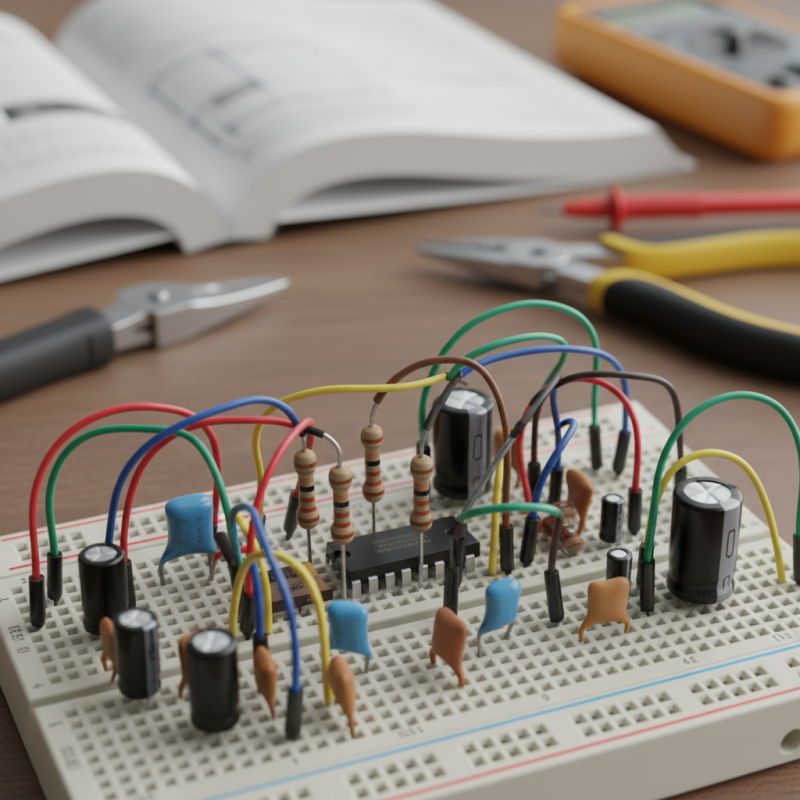
Resistors control current flow, allowing precise voltage levels. They limit the amount of electricity that passes through. Capacitors, on the other hand, store and release energy as needed. This interplay between resistors and capacitors shapes circuit behavior.
However, mistakes often happen. Many novices overlook the importance of values and tolerances. Others might confuse series and parallel configurations. Understanding these components is more than memorizing definitions. It requires practice and real-world application to grasp their impact fully.
Understanding the Role of Resistors in Electrical Circuits
In electrical circuits, resistors play a crucial role in controlling current flow. They limit the amount of electricity that can pass through, ensuring that components receive the right voltage. This helps protect sensitive parts from damage. Understanding how resistors work can significantly enhance your circuit design skills.
One tip for working with resistors is to always calculate their value based on your circuit requirements. This ensures proper functioning. Another important aspect is understanding the difference between series and parallel configurations. In series, resistors add up, increasing the total resistance. In parallel, the total resistance decreases, allowing more current to flow. This knowledge can aid in precision-based circuit designs.
Capacitors also need attention in this context. They store energy and release it when needed. Knowing how to integrate them with resistors can optimize your circuit’s performance. Experimenting with different combinations can lead to better results. However, it's essential to remain aware of your circuit’s limitations. Mistakes can be costly and lead to circuit failures. Always test components under safe conditions.
Exploring the Functionality of Capacitors in Circuit Design
Capacitors play a crucial role in circuit design. They store and release electrical energy, impacting how circuits operate. Understanding their functionality is key. Capacitors can smooth out voltage fluctuations, enabling devices to function more reliably. They are often used in power supplies and signal processing.
To design effective circuits, consider how capacitors interact with resistors. One tip is to remember that a capacitor's charge time is affected by resistance. Higher resistance slows down the charging process. This can lead to delays in circuit response. Another important point is using capacitors to filter noise. Placing them strategically can eliminate unwanted signals.
Capacitors come in various types, each with unique properties. Electrolytic capacitors have high capacitance but are polarity sensitive. Ceramic capacitors are more stable but provide lower capacitance. Make sure to choose the right type based on your design needs. Testing different configurations is essential to finding the best approach. Some combinations may not perform as expected, necessitating adjustments.
Key Electrical Properties: Resistance, Capacitance, and Their Units
Understanding resistance and capacitance is crucial in circuit design. Resistance, measured in ohms (Ω), quantifies how strongly a component opposes electric current. The higher the resistance, the less current flows. Reports indicate that over 60% of circuit issues stem from incorrect resistance values. This statistic highlights the need for precision in selecting resistors.
Capacitance is the ability of a component to store electrical energy. It is measured in farads (F). Capacitors play a vital role in filter circuits and energy storage. A standard capacitor can vary from picofarads to microfarads, impacting performance. Studies show that mismatched capacitor values can lead to signal distortion, affecting overall circuit integrity.
Practical applications often reveal flaws in our understanding. Many underestimate how resistance limits current flow. Similarly, novice designers may overestimate a capacitor's charge capacity. Recognizing these nuances can enhance circuit functionality significantly. Embracing imperfections in understanding paves the way for growth and innovation in electronic design.
Understanding Resistors and Capacitors in Circuits
This chart illustrates the average values of resistors and capacitors typically used in electronic circuits. The resistance is measured in ohms (Ω) while capacitance is measured in farads (F). This understanding is crucial for designing and analyzing electrical circuits.
Analyzing the Impact of Resistor and Capacitor Values on Circuit Behavior
Understanding the values of resistors and capacitors is crucial for effective circuit design. Resistors control the current flow, while capacitors store and release energy. A recent industry report indicated that the choice of these components directly affects circuit efficiency by up to 30%. This highlights the importance of selecting the right values.
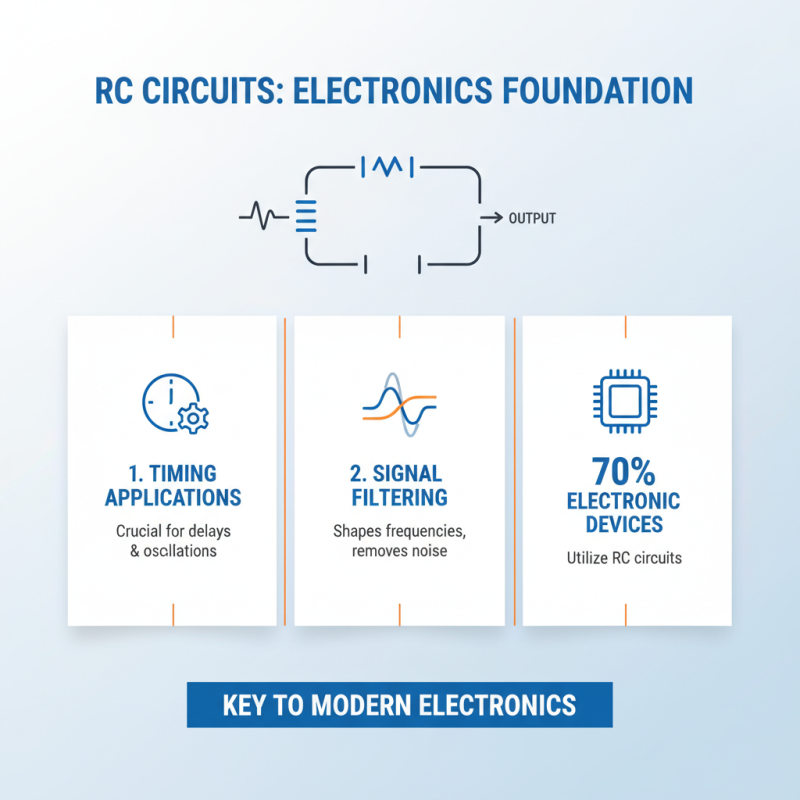
Resistor values can significantly influence voltage drop and power dissipation. Low-resistance circuits often result in higher currents. In contrast, high resistance can lead to inadequate performance. Capacitors, on the other hand, affect the timing characteristics of circuits. A report from the Electronics Industry Association states that capacitors with higher capacitance values can lead to slower discharge rates. This is critical for timing applications, where precision is essential.
Our choices can lead to unexpected outcomes. A miscalculated resistor value can cause heating issues. Similarly, choosing a capacitor with the wrong rating can lead to circuit failure. These mistakes are common, even among professionals. Continuous learning and vigilance in circuit design are necessary to mitigate these risks. Embracing the complexities of resistors and capacitors will enhance understanding of their circuit impacts.