Why Are Passive Components Essential in Electronic Circuits?
Passive components play a vital role in electronic circuits. These elements, such as resistors, capacitors, and inductors, do not require external power to operate. Instead, they rely on the energy of the signals passing through them. This characteristic makes passive components fundamental in shaping circuit behavior.
Consider a simple circuit. The resistor limits current flow. The capacitor stores and releases energy. The inductor creates magnetic fields. Each component interacts with others to maintain desired performance. Their functions are sometimes overlooked, yet they ensure stability and efficiency.
However, the importance of passive components is often undervalued. Engineers may focus on active elements, thinking they are the heart of circuits. Yet, without passive components, circuits could not function properly. Understanding their roles can lead to better design outcomes. Embracing the value of passive components might enhance our grasp of electronic design.
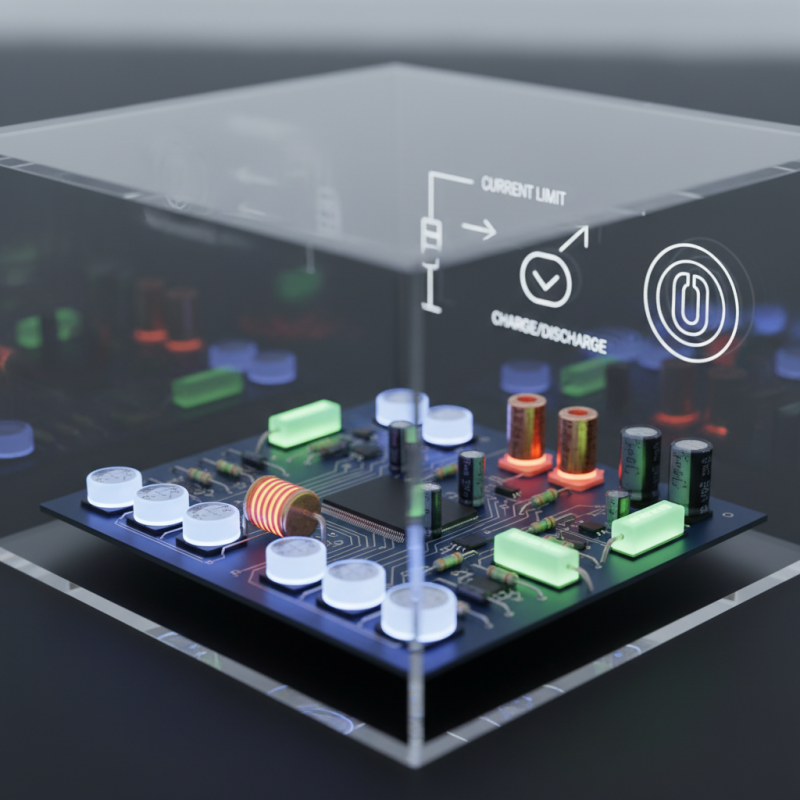
The Role of Passive Components in Electronic Circuits
Passive components play a vital role in electronic circuits. They do not require power to operate. Resistors, capacitors, and inductors are key examples. Resistors limit current flow and are used extensively. Capacitors store and release electrical energy. They filter signals in various applications. Inductors store energy in a magnetic field. Each component serves unique functions.
**Tips:** Consider the physical layout when placing passive components. Proximity to active components can affect performance. Also, think about the heat generated. Excessive heat can alter component lifespan.
Designing circuits involves balancing passive components effectively. This requires understanding their interaction with active parts. Miscalculations can lead to inefficiency. Not all passive components are interchangeable. Their values significantly impact circuit behavior. Test and verify before finalizing designs.
**Tips:** Use simulations to visualize circuit performance. This helps identify potential issues early on. Review designs regularly, especially after changes. It’s easy to overlook details during modifications. Keep learning about new passive component technologies. They can enhance your designs.
Importance of Passive Components in Electronic Circuits
The following chart illustrates the distribution of various types of passive components commonly used in electronic circuits, highlighting their significance in overall circuit functionality.
Types of Passive Components Used in Electronic Design
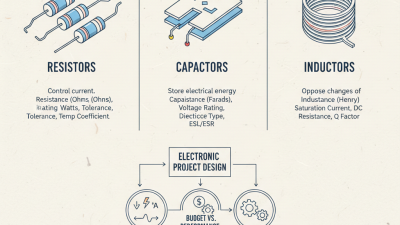
Passive components are key players in electronic circuits. They do not amplify signals but rather manage them. Common types of passive components include resistors, capacitors, and inductors. Each serves a distinct purpose.
Resistors limit the flow of electric current. They are crucial for protecting sensitive components. Capacitors store and release energy. They smooth out voltage fluctuations and filter signals in circuits. Inductors, on the other hand, store energy in a magnetic field. They are used in applications involving oscillating currents.
In design, selecting the right passive components is vital. A resistor that’s too large can reduce functionality. A capacitor with improper ratings may not filter effectively. Inductors need to match the frequency of the circuit. The choice can make or break a design. Each component must be considered carefully, as mistakes can lead to circuit failure.
Key Functions: Resistors, Capacitors, and Inductors Explained
Passive components play a crucial role in electronic circuits. Resistors, capacitors, and inductors each have distinct functions.
Resistors limit current flow and divide voltages. They help manage the electrical characteristics of circuits. The choice of resistance value impacts performance.
Sometimes, designers may overlook this, leading to inefficiencies.
Capacitors store and release electric energy. They smooth out voltage fluctuations. This behavior is vital for power supply circuits. Without proper capacitance, devices can malfunction.
One might underestimate the size or type of capacitor needed in a design, resulting in potential issues.
Inductors, on the other hand, store energy in a magnetic field. They resist changes in current. This property is essential in filtering applications. Yet, engineers can miscalculate inductance values.
An error can lead to unwanted oscillations or noise in the circuits. Each component's ideal role should align with the overall design goals. Understanding their unique functions helps in creating better,
more reliable circuits.
Impact of Passive Components on Circuit Efficiency and Performance
Passive components play a vital role in the efficiency and performance of electronic circuits. These components, including resistors, capacitors, and inductors, do not actively amplify signals. Instead, they influence current and voltage. According to the "Electronic Component Industry Report 2022," passive components account for approximately 70% of total component usage in various circuits. Their proper selection can significantly enhance energy efficiency.
In terms of circuit performance, passive components help manage signal integrity. For instance, capacitors can filter out noise, reducing interference. A study by "Tech Insights" shows that using high-quality capacitors can increase circuit reliability by up to 40%. However, designers sometimes overlook these components, aiming for flashy active parts. This neglect can lead to inefficiencies and unexpected failures.
Thermal performance is another critical aspect of passive components. They generate heat, which can impact overall circuit function. Many engineers fail to consider this, despite a report by "Electronics Weekly" indicating that poor thermal management results in a 30% decrease in performance. A balanced approach, where both passive and active components receive equal attention, is often neglected, leading to a need for reconsideration in design strategies.
Market Trends: Growth of Passive Component Industry in Electronics
The passive component industry is witnessing remarkable growth. According to a recent industry report, the global market for passive components is projected to reach $34 billion by 2025. This growth is largely driven by the surge in consumer electronics and increased demand for energy-efficient devices. Passive components, such as capacitors, resistors, and inductors, are foundational in circuit design and play critical roles in performance optimization.
Growth is fueled by trends in electronics, specifically in the automotive and IoT sectors. Electric vehicles are adopting more sophisticated electronic systems, driving demand for high-quality passive components. Reports show that the automotive segment alone will account for over 25% of passive component sales by 2024. However, manufacturers face challenges in scaling production to meet this rising need. Supply chain disruptions have led to raw material shortages that hinder growth potential.
Furthermore, while the demand is robust, the industry must address ongoing concerns about quality and reliability. Low-quality components can lead to device failures, affecting consumer trust. Continuous innovation in materials and designs is essential to overcome such challenges. Companies are exploring new manufacturing techniques to improve durability and efficiency, but progress is slow. The industry's ability to adapt will be crucial for sustaining growth in this competitive landscape.