Manual Linear Stage Tips for Precise Movement Control?
In the world of precision mechanics, achieving exact movement control is crucial. The Manual Linear Stage is an essential tool for tasks that require meticulous positioning. This device allows users to control movement along a straight path. However, navigating its complexities can pose challenges.
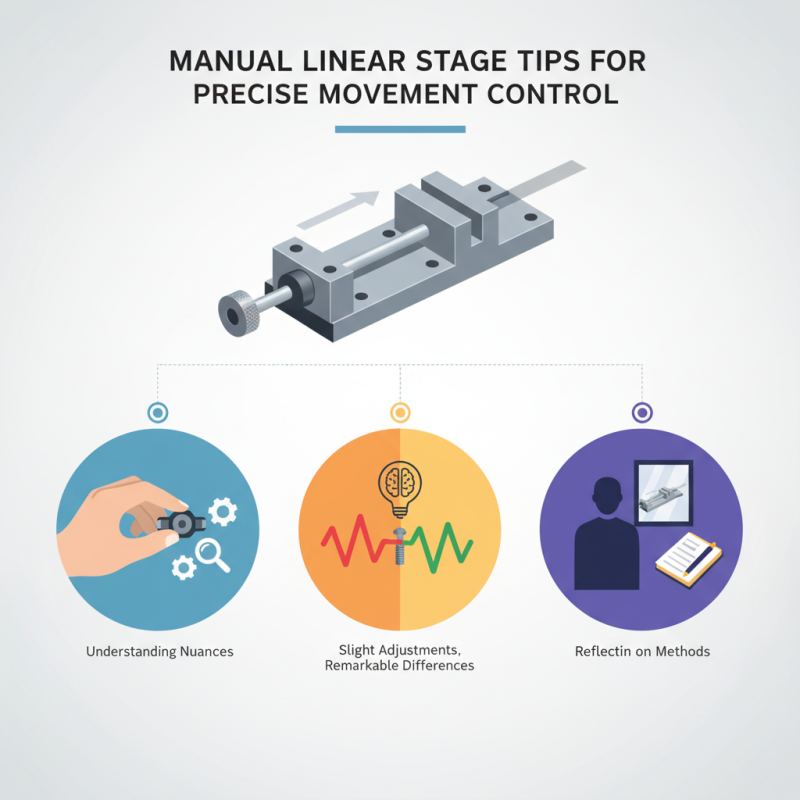
Understanding the nuances of the Manual Linear Stage enhances user experience. It’s not just about moving from point A to point B. Attention to detail can significantly affect results. For example, the right grip can ensure better control, while improper handling might lead to frustrating misalignment.
Practicing with these stages reveals areas for improvement. Users often find that slight adjustments can lead to remarkable differences. Recognizing these adjustments is key to mastering the Manual Linear Stage. Even seasoned users sometimes overlook minor aspects. Reflecting on one's methods can improve efficiency. Overall, exploring these tips is essential for anyone aiming for precision in movement control.
Understanding Manual Linear Stages: Key Features and Specifications
Manual linear stages are essential tools in precision movement control across various industries. These devices often feature a robust design and precise adjustment mechanisms. A recent report highlighted that over 60% of engineers prioritize accuracy when selecting a manual linear stage. Key specifications such as travel length, load capacity, and resolution play crucial roles in their effectiveness.
The travel range can significantly impact a stage's versatility. Stages with longer travel distances allow for greater flexibility in applications. Additionally, a load capacity of at least 20 kg is common in many sectors. Yet, it's important to note that exceeding this capacity can lead to compromised performance. For resolution, stages often provide movements as fine as 1 micron. However, achieving such precision may require careful calibration.
While manual linear stages offer advantages, users must be mindful of their limitations. Factor in the effects of user experience on control quality. In practice, some users may struggle with inconsistent adjustments. Regular maintenance is also essential to ensure long-term reliability. Understanding these aspects is vital for maximizing the efficiency of manual linear stages in real-world applications.
Types of Manual Linear Stages and Their Applications in Precision Control
Manual linear stages are essential for many applications requiring precise movement control. These stages are used in manufacturing, research, and development. The primary types of manual linear stages include crossed roller stages, lead screw stages, and belt-driven stages. Each type has unique characteristics that cater to specific requirements.
Crossed roller stages offer high accuracy and stiffness. They are ideal for applications needing low friction and stability.
Lead screw stages excel in precision but can require more manual effort to achieve movement. They are commonly used in microscopy and laser systems. According to a recent industry report, about 63% of companies opt for lead screw designs for their reliability and cost-effectiveness.
Belt-driven stages, on the other hand, provide speed advantages but may lack the precision of other models. They are suitable for automation and high-speed applications.
However, users must be cautious about backlash issues. This concern often leads to over-corrections that could compromise the intended motion accuracy. Evaluating the specific needs for applications remains crucial in selecting the right manual linear stage.
Factors Influencing Movement Accuracy: Load Capacity and Alignment
When working with manual linear stages, movement accuracy is crucial. Two key factors that influence this accuracy are load capacity and alignment. Load capacity refers to the maximum weight the stage can handle without compromising its performance. If the load exceeds this limit, it may cause misalignment. This misalignment can lead to unintentional shifts during operation. Therefore, it’s essential to choose the right stage for your load requirements.
Alignment plays a significant role in achieving precise movement. Ensuring that the stage is properly aligned can minimize friction and prevent deviations. However, achieving perfect alignment is often challenging. Minor discrepancies can arise from uneven surfaces or improper installation. These small errors can accumulate, leading to significant inaccuracies. Regular checks and adjustments are necessary to maintain optimal alignment.
It’s also important to consider the environment. Factors like temperature changes and vibrations can impact performance. A stable setup will yield better results. However, many users overlook these environmental considerations, leading to unsatisfactory outcomes. In the end, attention to load capacity and careful alignment can significantly improve the effectiveness of manual linear stages.
Best Practices for Maintenance and Calibration of Linear Stages
Proper maintenance and calibration of linear stages are crucial for achieving precise movement control. Regular inspection of components, such as bearings and screws, is essential. A study reported that more than 20% of linear stage failures stem from inadequate maintenance. Ignoring these elements can lead to costly delays and inaccuracies in operations.
Calibrating linear stages should be based on data. Organizations should conduct routine checks at intervals determined by usage patterns. Vibration testing and load analysis are valuable methods for this purpose. According to industry research, calibration errors can lead to a 15% increase in operational inefficiencies. Attention to detail during these processes can significantly extend equipment lifespan.
Even with the best practices, mistakes can and do happen. Technicians may overlook minor issues, leading to major discrepancies. Adjustments made hastily can result in further misalignment. Training and awareness programs can mitigate these risks. Developing a culture of precision in the workplace will enhance overall productivity and accuracy.
Manual Linear Stage Performance Metrics
This bar chart illustrates the key performance metrics of manual linear stages, including speed, precision, load capacity, repeatability, and calibration frequency. These metrics are crucial for ensuring optimal movement control in precision applications.
Comparative Analysis of Manual Vs. Motorized Linear Stages in Precision Tasks
When comparing manual and motorized linear stages, precision is key. Manual stages offer tactile feedback. Users can feel the movement directly. This can enhance their control over the fine adjustments needed in delicate tasks like microscopy. However, it demands steady hands and a practiced technique. One slip can ruin measurements.
Motorized stages excel in consistency. They provide repeatable results over time. A simple push of a button can yield precise movements. This eliminates errors from human hands. Yet, users may find them less intuitive. There’s often a learning curve. Advanced settings can overwhelm beginners, leading to mistakes.
Both systems have their merits. Manual stages allow for a personal touch, but may lack in precise repeatability. Conversely, motorized options shine in automation but can distance users from the physical interaction with their work. It’s essential to evaluate the specific needs of each task. The choice between them often comes down to personal preference and the level of precision required. Each method presents its own challenges and advantages, leaving room for reflection on what truly suits the user's requirements.