Top 10 Tips for Choosing Resistors and Capacitors Effectively?
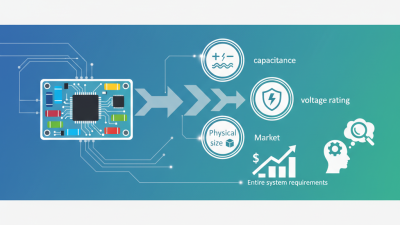
Selecting the right resistors and capacitors can significantly impact your electronic projects. Understanding their specifications is crucial. This knowledge helps in ensuring the reliability and efficiency of your circuits. Inaccurate selections may lead to malfunctions or decreased performance.
Resistors and capacitors serve essential roles in circuit functionality. Each component has distinct characteristics that dictate their behavior in a circuit. For instance, the resistance value determines how much current passes through, while capacitance affects energy storage. Mistakes in choosing these components can result in unexpected outcomes.
Navigating through specifications can be overwhelming. It's easy to overlook essential factors such as tolerance and voltage ratings. This guide aims to clarify key considerations. Be prepared to challenge common assumptions. Consider your specific application needs, and remember that the best choice often comes from careful reflection and understanding.
Understanding the Role of Resistors and Capacitors in Circuits
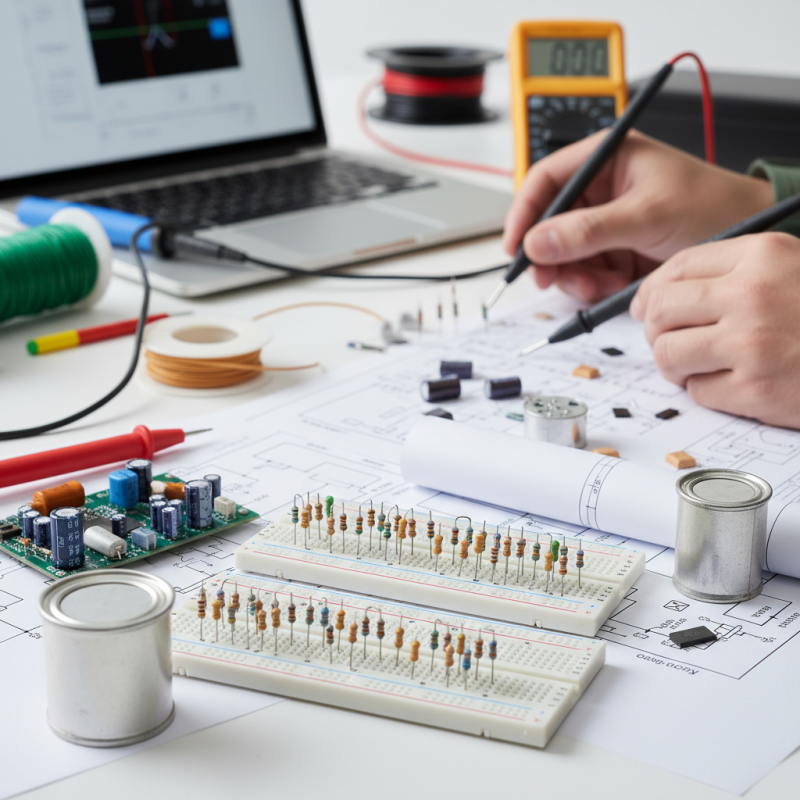
Resistors and capacitors play crucial roles in electronic circuits. Resistors limit the flow of current, while capacitors store and release electrical energy. Understanding their function is vital for effective circuit design.
Choosing the right resistor involves considering its resistance value, power rating, and tolerance. A common mistake is overlooking the power rating, which could lead to component failure. Always ensure the resistor can handle the maximum current without overheating.
For capacitors, pay attention to capacitance value and voltage rating. It's easy to underestimate the voltage requirement, which may damage the capacitor. Selecting the wrong type of capacitor can also affect performance. Ceramic capacitors are great for high-frequency applications, while electrolytic capacitors work better for bulk energy storage.
Evaluating the circuit’s requirements is essential. Sometimes, trial and error leads to better understanding. This process can reveal insights into how components interact. Though it takes time, this exploration can enhance your skills. Embrace the learning journey for more effective designs.
Top 10 Tips for Choosing Resistors and Capacitors Effectively
This chart illustrates the importance of various parameters when selecting resistors and capacitors for electronic circuits. Each parameter is rated on a scale of 1 to 10, indicating its significance in ensuring optimal circuit performance.
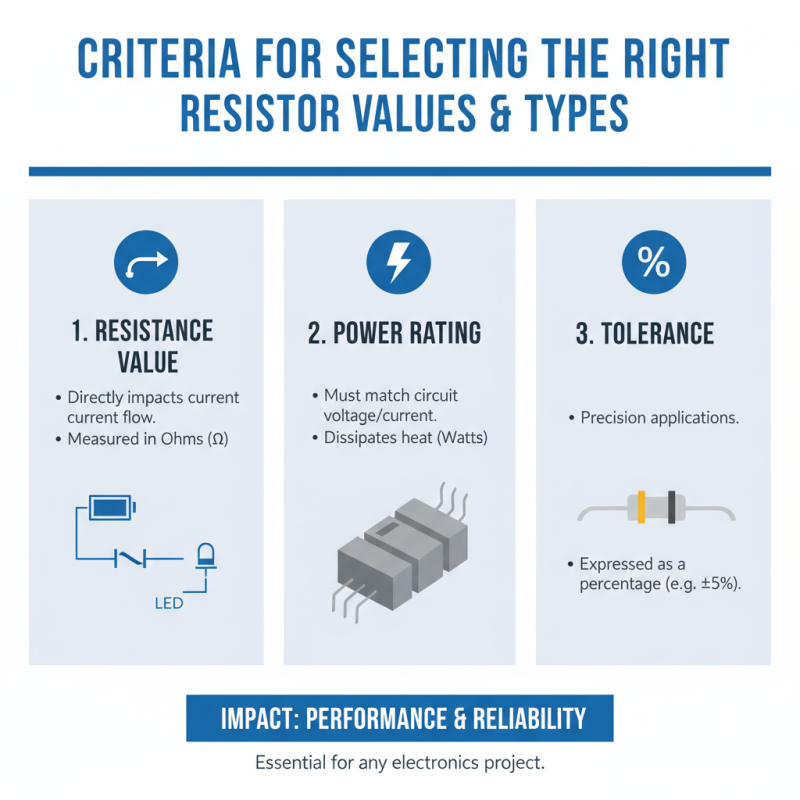
Criteria for Selecting the Right Resistor Values and Types
Choosing the right resistors and capacitors is vital for any electronics project. Proper selection can impact performance and reliability. When selecting a resistor, consider resistance value, power rating, and tolerance. The resistance value impacts current flow directly. Ensure the power rating fits the intended voltage. Tolerance plays a role in precision applications.
When selecting capacitors, focus on capacity, voltage rating, and leakage current. The capacity determines how much charge a capacitor can store. Voltage ratings must exceed working voltage for safety. High leakage current can affect performance.
Tip: Always review component specifications. Some resistors have varying thermal coefficients, affecting their accuracy over temperature. Not every capacitor is suitable for every application; using the wrong type can lead to inefficiencies. Pay attention to the environment where components will be used, as humidity and temperature can influence their performance.
Key Factors in Choosing Appropriate Capacitors for Applications
Choosing the right capacitors for your applications is crucial. Capacitors come in various types, including ceramic, electrolytic, and tantalum. Each type serves different purposes. Understanding your project requirements is essential before making a decision. Sometimes, users underestimate the impact of capacitance values. Selecting a capacitor with the wrong value can lead to performance issues.
Consider the voltage rating as well. A capacitor must handle the maximum voltage in your circuit. If you choose one with insufficient rating, it could fail. The temperature coefficient is another important factor. It indicates how capacitance changes with temperature. Not all applications operate in standard conditions.
Don’t overlook size and style either. Ensure the capacitor fits within your circuit design. Space constraints can limit your choices. Reviewing your circuit layout may reveal additional details needed for proper selection. Finding the balance between size, cost, and functionality can be challenging. It's worth engaging with peers or using simulation tools for better insights. Sometimes, it’s beneficial to reconsider specifications after testing prototypes.
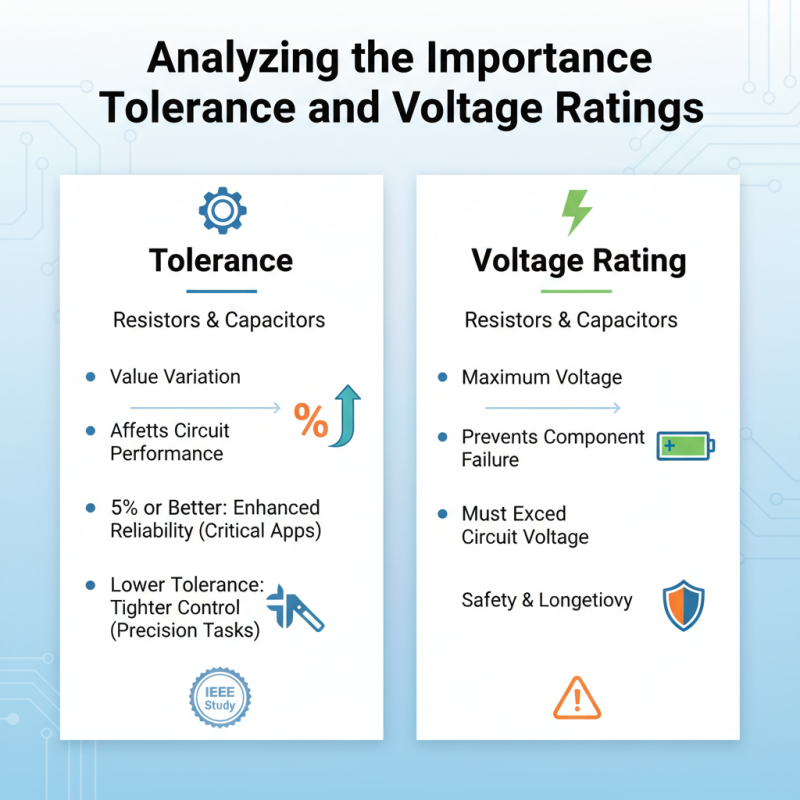
Analyzing the Importance of Tolerance and Voltage Ratings
When choosing resistors and capacitors, tolerance and voltage ratings are paramount. Tolerance indicates how much a component's value may vary, significantly affecting circuit performance. A study by the IEEE reveals that a tolerance of 5% or better can enhance reliability in critical applications. Components with lower tolerances yield tighter control over performance, which is vital for precision tasks.
Voltage ratings matter too. They define the maximum voltage a component can handle. Exceeding this rating can lead to failures or, worse, circuit damage. According to a recent report by Electronic Components Industry Association, over 40% of component failures stem from undervalued voltage specifications. Hence, understanding these ratings prevents costly mistakes.
Tip: Always check tolerance levels before making a selection. This simple step can save time and resources. Evaluate the application to select the appropriate voltage rating. Sometimes, opting for a higher rating provides an added safety margin for your design. Balancing these factors is essential for optimal circuit function, ensuring both efficiency and longevity.
Best Practices for Evaluating Component Quality and Reliability
When evaluating resistors and capacitors, quality and reliability are paramount. The component's lifespan can greatly affect overall circuit functionality. According to industry reports, nearly 30% of electronic failures trace back to component deficiencies. This statistic underscores the importance of thorough evaluation in component selection.
Pay attention to specifications. Tolerance, temperature coefficient, and power rating are crucial factors. Components must meet design requirements precisely. A resistor with a tolerance of ±1% may not suffice in critical applications. In a reliability assessment, low failure rates are vital. Studies indicate that high-quality capacitors have a failure rate of less than 0.1% over five years, enhancing device longevity.
Proprietary testing methods and certifications are worth considering. These validate a component's performance under stress conditions. Many manufacturers provide extensive data sheets. However, not all data is equally trustworthy. Verify claims through third-party evaluations. Instances of inflated performance metrics are not uncommon. Being aware of these pitfalls can save significant future costs. Emphasizing quality and reliability shapes the foundation of effective component selection.