Top 5 Tips for Choosing the Right Drop Cable for Your Needs?
Selecting the best Drop Cable can feel overwhelming. With numerous options available, making an informed choice is critical. Industry expert John Anderson emphasizes, “Choosing the right Drop Cable is essential for ensuring optimal performance and reliability.” This underscores the importance of understanding your specific needs before making a decision.
Drop Cables play a vital role in various applications, from telecommunications to data transmission. The right cable can enhance signal quality and reduce interruptions. However, not all Drop Cables are created equal. Factors such as material, length, and installation environment influence performance. It’s essential to consider these aspects carefully.
While many might opt for the cheapest option, this could lead to future regrets. A poor choice can result in costly repairs or downtime. It’s wise to evaluate your requirements thoroughly. Investing time in understanding Drop Cables can save you hassle later. Moreover, consulting with industry professionals can provide insights that may not be apparent initially.
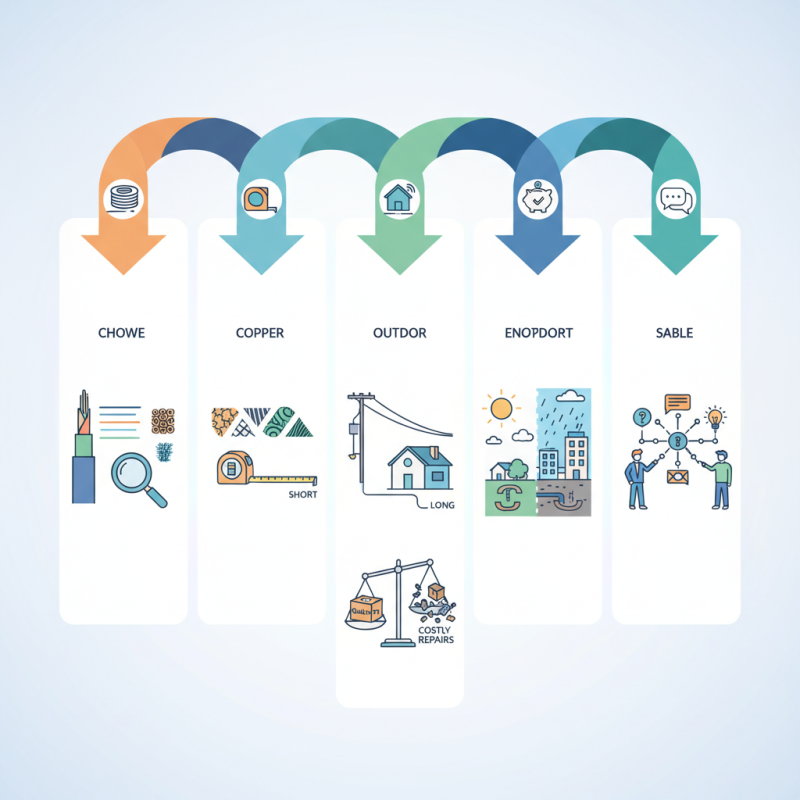
Understanding Different Types of Drop Cables and Their Uses
When selecting drop cables, understanding their types and applications is crucial. Drop cables primarily come in two varieties: fiber optic and copper. Fiber optic drop cables are known for high-speed data transmission. Reports from industry leaders indicate that fiber optic connections can reach speeds up to 1 Gbps or more, making them ideal for data-heavy needs.
Copper drop cables, on the other hand, are still widely used for local area networks (LANs). They provide reliable connections in short distances. However, experts warn that copper's limited bandwidth can create bottlenecks as networks grow. Research shows that, in environments requiring heavy data throughput, 90% of users prefer fiber optic cables.
Consider your environment as well. Outdoor drop cables are built to withstand harsh weather. Still, they may require extra shielding in areas prone to interference. This customization can add cost and complexity. A careful balance of needs and budget is essential. Users often find themselves evaluating long-term benefits versus short-term costs. It's a decision that can impact network efficiency and reliability significantly.
Top 5 Tips for Choosing the Right Drop Cable for Your Needs
| Tip | Description | Types of Drop Cables | Best Use Cases |
| 1. Assess Your Needs | Understanding the bandwidth and distance requirements for your application. | Fiber Optic, Coaxial, Twisted Pair | High-speed internet, TV, Networking |
| 2. Consider Environment | Selecting cables that can withstand environmental factors. | Outdoor Rated, Indoor Rated | Outdoor installations, indoor wiring in businesses |
| 3. Check Cable Length | Ensure the length is suitable for your installation without excess slack. | Standard and Custom Lengths | Home networking, commercial setups |
| 4. Evaluate Shielding Options | Selection based on interference susceptibility in your area. | Unshielded Twisted Pair (UTP), Shielded Twisted Pair (STP) | Noisy environments, sensitive data transmission |
| 5. Budget Accordingly | Taking into account both initial and long-term costs of the cable. | Economical and Premium Options | Residential, enterprise solutions |
Evaluating the Environmental Conditions for Cable Installation
When selecting a drop cable, environmental conditions play a vital role. Temperature fluctuations can significantly affect cable performance. For instance, cables exposed to extreme heat may experience insulation breakdown. A study by the Institute of Electrical and Electronics Engineers found that approximately 25% of cable failures are linked to temperature stress. Understanding the local climate is essential for ensuring longevity.
Moisture is another critical factor. In areas with high humidity, choosing cables with adequate moisture resistance is crucial. According to the National Electrical Manufacturers Association, moisture-related failures account for nearly 20% of cable issues. Therefore, assessing the installation environment is not just advisable, but necessary for optimal functioning.
Wind and UV exposure are additional considerations. Cables outdoors face wear from wind-induced abrasion and sun damage. Reports indicate a 15% increase in lifespan for UV-resistant cables. Ignoring these environmental factors can lead to unexpected failures and increased maintenance costs. It’s essential to carefully evaluate all conditions before making your selection.
Assessing Cable Length and Its Impact on Signal Quality
When selecting drop cables, it's essential to assess cable length. The length significantly impacts signal quality. According to industry reports, longer cables can introduce more attenuation and signal loss. This loss can degrade performance in critical applications, such as data transmission and video streaming. Keeping the cable length to a minimum can help in maintaining optimal signal integrity. A rule of thumb is to stay under 100 meters for most setups.
Tip: Choose a cable length that suits your installation while factoring in future adjustments. Excessive length may lead to unnecessary costs and complications.
Another aspect to consider is the environment in which the cable will be installed. Cables exposed to interference should be shorter to avoid performance issues. Professional reports indicate that the electromagnetic interference (EMI) can have a notable effect over longer distances. Shielded cables might help in these scenarios, but optimal length remains critical.
Tip: Test your setup before finalizing the installation. Signal quality at different lengths can reveal surprising results. Be prepared to make adjustments to ensure the best performance.
Choosing the Right Gauge for Optimal Performance and Durability
When selecting a drop cable, gauge plays a critical role in performance and durability. A lower gauge number indicates a thicker cable, which can handle more current safely. This is essential for maintaining power integrity over longer distances. Thicker cables reduce the risk of heat buildup, ensuring your installations work efficiently and reliably.
Understanding the specific needs of your project is vital. For instance, a gauge that works for lighting may not suit high-powered equipment. Many users underestimate this detail, leading to potential failures down the line. Observing local regulations and best practices can help mitigate risks. Always prioritize safety by consulting with experts or guides relevant to your application.
Sometimes, individuals might choose based on aesthetics or initial cost. This approach can lead to problems later, such as increased resistance and decreased overall performance. Reflecting on your choice of gauge is worth the time. In many cases, investing in the right cable from the start can save headaches and expenses in the future.
Identifying Compatibility with Existing Systems and Equipment
When choosing drop cables, compatibility with existing systems is crucial. Many professionals overlook this aspect, leading to costly errors. A survey by the Fiber Optic Association reports that 30% of installation failures stem from incompatibility issues. Ensuring the drop cable aligns with your current equipment can prevent disruptions.
Different systems may require specific cable types. For instance, single-mode cables work best for long distances, while multi-mode suits shorter runs. The decision should be based on your existing framework. Incompatibility can lead to signal loss or even complete failures. You should examine specifications provided by manufacturers closely.
Consider the connectors and interfaces too. A mismatch in connectors often occurs, resulting in increased installation time. According to the International Telecommunication Union, ensuring proper connector types can improve efficiency by up to 25%. Assess your current cabling environment and document what you have. It's necessary to reflect on these details to make informed decisions.
Top 5 Tips for Choosing the Right Drop Cable for Your Needs