China Top 10 Electronic Components for Sale?
China is a major source of electronic components for sale, serving manufacturers, engineers, repair shops, and product developers worldwide. Its market includes resistors, capacitors, connectors, sensors, microcontrollers, power modules, LEDs, relays, memory chips, and printed circuit board assemblies. However, a low price does not always mean good value.
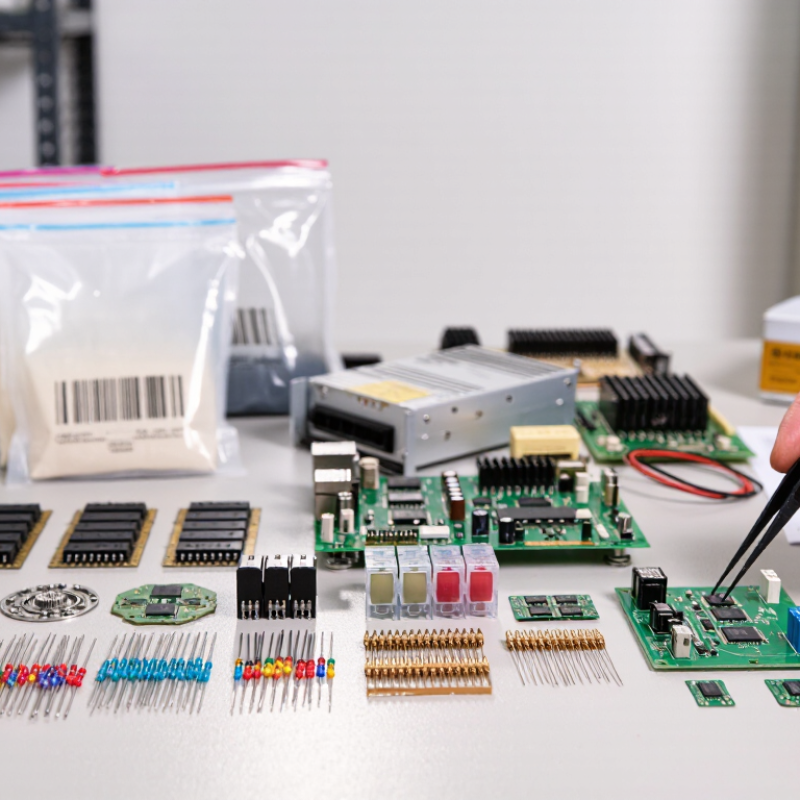
This guide explores ten widely requested component categories from Chinese suppliers. It focuses on practical selection factors, including datasheet accuracy, factory reputation, batch consistency, traceability, packaging, and after-sales support. A reliable supplier should provide clear part numbers, current specifications, test records, and realistic lead times. Photos of sealed moisture-resistant bags can help, but photographs alone prove little.
Availability changes quickly. Some popular parts may become difficult to source, while unfamiliar alternatives may appear overnight. We may also overlook a promising supplier or rate one category differently from another buyer. That is worth admitting. Careful verification remains essential.
Before ordering, compare electrical ratings with your design requirements. Check voltage tolerance, operating temperature, lifecycle data, and certification documents. For sensitive products, request samples and independent testing before approving a large purchase. A small label mismatch can cause major assembly delays. Small details matter.
The companies and product types discussed here are selected for their market visibility, technical usefulness, and sourcing potential. They should not be treated as automatic recommendations. Engineers and procurement teams must confirm compliance with applicable safety, environmental, import, and quality requirements in their destination markets. Reliable sourcing requires evidence, patience, and a willingness to ask uncomfortable questions.
China’s Component Market: 2023 IC Imports Reached US$349.4B (GAC)
China’s electronic component market is broad, price-sensitive, and closely connected to global manufacturing. According to China Customs data reported by GAC, integrated circuit imports reached US$349.4 billion in 2023. This figure shows strong demand for chips, even as local production capacity continues to develop.
For buyers asking about the top components for sale, common categories include microcontrollers, memory chips, power semiconductors, sensors, connectors, capacitors, resistors, LEDs, display modules, and circuit protection devices. These parts support factory automation, consumer electronics, vehicles, medical equipment, and renewable energy systems. In practice, availability changes quickly. A part listed today may require substitution tomorrow.
Reliable purchasing requires more than comparing unit prices. Buyers should check manufacturer documentation, date codes, package condition, electrical specifications, and traceability records. Independent inspection can identify marking errors, moisture damage, or mixed batches before assembly begins. I have found that small packaging details often reveal larger supply problems.
The US$349.4 billion import value also needs careful interpretation. It reflects trade value, not guaranteed quality or domestic consumption alone. Some figures may involve processing, re-exporting, or complex supply chains. That limitation deserves attention. A lower quotation can become expensive after testing, delays, and redesign work. Experienced buyers usually approve samples, confirm technical tolerances, and keep a qualified backup source.
The Top 10 Components: Semiconductors, Passives, Connectors, and Sensors
China Top 10 Electronic Components for Sale?
China’s component market covers semiconductors, resistors, capacitors, inductors, connectors, sensors, diodes, transistors, relays, and switches. Together, these parts support power supplies, industrial controls, vehicles, and consumer electronics. The WSTS Spring 2024 Forecast valued global semiconductor sales at 611.2 billion US dollars in 2024, with growth projected to 687.4 billion in 2025. That momentum increases demand for processors, memory devices, power modules, and discrete semiconductors. Small parts matter.
Passives deserve equal attention. Resistors control current, while capacitors manage noise and voltage changes. Inductors stabilize power conversion. Connector selection depends on contact material, mating cycles, temperature, and vibration. Bishop & Associates reported a global connector market of about 84.2 billion US dollars in 2023, showing how essential reliable interconnection has become. Heat changes everything. A lower purchase price can create higher field costs when plating, tolerance, or insulation quality is weak.
Sensors add measurement intelligence through temperature, pressure, motion, light, and magnetic detection. A Yole Group report estimated the global MEMS market at roughly 14.5 billion US dollars in 2023. Buyers should request lot traceability, test conditions, certificates, and sample inspection before volume orders. IPC manufacturing data also emphasizes process consistency and supply-chain quality. I would not treat any top-ten ranking as permanent; application, lifecycle, and failure risk can quickly change the order. Specifications still drift.
China Top 10 Electronic Components for Sale
The Top 10 Components: Semiconductors, Passives, Connectors, and Sensors
The chart compares approximate 2023 worldwide market values by component category, shown in billions of U.S. dollars. Values are rounded industry estimates compiled from publicly reported semiconductor, passive-component, connector, and sensor market data; no company or brand figures are included.
Semiconductor Categories: ICs, LEDs, Power Devices, and Modules
China Top 10 Electronic Components for Sale?
China’s electronic component market covers many practical semiconductor categories. The most useful choices include microcontrollers, memory ICs, power-management ICs, sensors, interface ICs, LED emitters, display LEDs, rectifier diodes, MOSFETs, and integrated power modules. Each category serves a different design need. Microcontrollers manage control logic in appliances and industrial equipment. Memory ICs store firmware and operating data. Sensors convert temperature, pressure, or motion into measurable signals.
LEDs require careful checks for brightness, color temperature, forward voltage, and heat control. Power devices need stronger attention to voltage ratings, current limits, switching losses, and thermal resistance. Modules can shorten assembly time, but their pin layout and protection features must match the target circuit. A module that looks convenient may create repair problems later. I have seen buyers compare prices first and specifications afterward. That order causes avoidable mistakes.
Reliable purchasing depends on traceability, current datasheets, sample testing, and controlled storage. Inspect package markings, solderability, moisture protection, and batch consistency. Request test reports when safety or performance matters. Confirm compliance with applicable electrical, environmental, and import requirements before production. My checklist is useful, but not perfect. Some suppliers provide clear documents while missing long-term reliability data. Engineers should test samples under real load, heat, vibration, and voltage variation. Small differences matter. A low-cost component can become expensive after redesigns, field failures, or delayed deliveries.
How to Buy in China: MOQ, Certification, Lead Time, and Supplier Verification
China Top 10 Electronic Components for Sale?
Buying electronic components in China requires more than comparing unit prices.
Start with a clear specification, target quantity, and delivery window. MOQ often changes by package size, customization, and production batch. A supplier may accept 100 pieces for standard stock but require 1,000 pieces for customized parts.
The WSTS Spring 2024 Forecast valued global semiconductor sales at 611.2 billion US dollars in 2024. Such scale increases availability, but it does not guarantee quality or traceability. Lead times should include production, inspection, and transport. Add buffer days.
Certification depends on the destination market and product use.
Request relevant test reports, declarations, material records, and lot traceability. RoHS and REACH may matter for European sales, while other markets can require different compliance evidence. Do not accept a certificate image alone. Verify its number, scope, issuing laboratory, and matching model.
Supplier verification should include the business license, factory address, quality system, sample inspection, and a small trial order. ISO 9001 registration helps, but it cannot replace product testing. That point is easy to overlook.
Tips:
Ask for a written lead-time promise. Confirm whether stock is factory stock or old inventory. Compare samples from two suppliers. Keep photos, test results, and serial records. A lower MOQ may reduce commitment, yet increase unit cost.
My own practical view is imperfect: online audits are useful, but an in-person inspection can reveal crowded storage, weak labeling, or rushed packaging. Build that risk into the purchasing decision.