What Are China Top Passive Electronic Components?
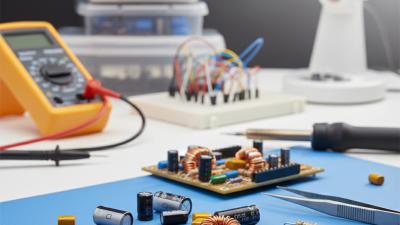
China has become a major manufacturing base for passive electronic components, supplying capacitors, resistors, inductors, filters, and related parts worldwide. These components rarely receive attention, yet they quietly stabilize every circuit. A tiny 0201 resistor can control current inside a smartphone, while an MLCC may smooth voltage on an automotive control board.
This introduction examines China’s leading passive electronic components through production capability, application value, quality control, and supply-chain reliability. It considers established categories, including multilayer ceramic capacitors, aluminum electrolytic capacitors, chip resistors, power inductors, and magnetic components. Leading Chinese manufacturers often compete through high-volume production, customized specifications, automated inspection, and shorter regional delivery times. However, “top” does not always mean the largest factory or the lowest price. Performance depends on capacitance stability, tolerance, rated voltage, temperature behavior, endurance, and documented traceability.
The evaluation should reference technical datasheets, test reports, factory audits, and relevant international standards. Automotive, medical, industrial, and consumer applications require different evidence. A component that works well in a household charger may fail under vibration, humidity, or repeated thermal cycling. Real purchasing decisions are more complicated.
The picture is not perfectly tidy.
Market rankings can change quickly, and public information may not reveal every manufacturing limitation. Buyers should verify samples, lifecycle data, qualification records, and replacement policies before approving suppliers. This article therefore focuses on practical comparison rather than exaggerated claims. It aims to explain where China’s strengths are convincing, where uncertainty remains, and how engineers can select reliable passive electronic components for specific designs.

Definition and Role of Passive Electronic Components
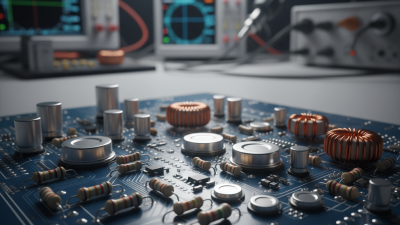
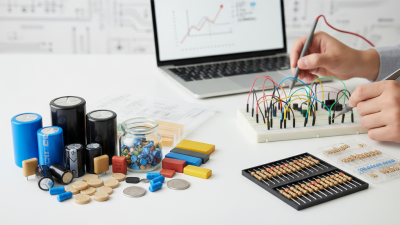
Passive electronic components work without generating electrical gain or requiring an external control signal. They store, resist, filter, or transfer energy within a circuit. The main types include resistors, capacitors, inductors, transformers, and certain filters. A resistor limits current and sets voltage levels. A capacitor smooths ripple, stores charge, and supports timing. An inductor manages changing current and reduces high-frequency noise. These functions seem simple. Yet small tolerances can alter equipment performance.
China’s major passive component manufacturing sector supplies power systems, communication equipment, industrial controls, vehicles, and consumer electronics. Their importance is practical: a stable capacitor can protect a processor from sudden voltage changes. A precise resistor can help a sensor report temperature more consistently. Manufacturing quality depends on material selection, dimensional control, thermal testing, and traceable inspection. Engineers compare resistance, capacitance, inductance, voltage rating, temperature range, lifetime, and failure behavior. A low price is not enough.
In real design work, the best component is rarely the smallest or cheapest. It must fit the circuit, operating environment, and maintenance plan. For example, a capacitor rated near its voltage limit may age faster under heat. That detail is easy to miss during a quick parts review. Domestic supply can offer broad specifications and flexible production, but consistency still requires independent verification. Datasheets help. Samples and testing matter more. Some choices remain imperfect when cost, size, and reliability conflict.
What Are China’s Top Passive Electronic Components? Definition and Role
Passive electronic components do not provide power gain. In an ideal sinusoidal AC circuit, a resistor keeps current and voltage in phase, a capacitor makes current lead voltage by 90°, and an inductor makes current lag voltage by 90°.
Chart interpretation: The phase angle shows the ideal relationship between current and voltage. Resistors primarily limit current and dissipate energy, capacitors store energy in an electric field, and inductors store energy in a magnetic field. These component types are widely used in power supplies, filtering, signal conditioning, timing, and energy management circuits.
Key Materials and Manufacturing Processes
What Are China’s Top Passive Electronic Components?
Key Materials and Manufacturing Processes
China’s leading passive components include multilayer ceramic capacitors, chip resistors, inductors, and aluminum electrolytic capacitors. Their performance depends on powder purity, particle size, and thermal control. MLCC production starts with barium titanate powder. Manufacturers mix it, cast thin ceramic tapes, print nickel electrodes, and laminate hundreds of layers. Sintering follows. Temperature errors can create cracks or capacitance loss.
Chip resistors usually combine an alumina substrate with a resistive film, often based on ruthenium compounds. Laser trimming sets resistance precisely. Inductors use ferrite cores and copper conductors. Winding tension matters. Too much tension can damage insulation. Aluminum capacitors require etched foil, oxide forming, electrolyte filling, sealing, and aging tests. The 2024 USGS Mineral Commodity Summaries reported global tantalum mine production at about 2,100 metric tons in 2023. This figure shows why material sourcing and recycling deserve closer attention in tantalum capacitor production. The data is useful, but it does not reveal every factory’s real inventory.
Tips: Check powder certificates, electrode thickness, and sintering profiles. Request reliability data at rated temperature and voltage. Do not trust capacitance alone. Inspect moisture resistance, insulation, and batch traceability. A cheaper component may pass initial testing yet drift after thermal cycling. That risk is easy to underestimate.
Performance Standards and Quality Evaluation
What Are China Top Passive Electronic Components?
Performance Standards and Quality Evaluation
China’s leading passive components are resistors, capacitors, and inductors. They support power supplies, electric vehicles, communications equipment, and industrial controls. Mordor Intelligence estimates the global passive electronic components market will continue growing through 2029, driven by electrification and advanced connectivity. China remains a major manufacturing base, but volume alone does not prove quality.
Resistor evaluation should include resistance tolerance, temperature coefficient, rated power, and short-time overload. IEC 60115 provides relevant test principles for fixed resistors. For capacitors, engineers normally check capacitance tolerance, insulation resistance, equivalent series resistance, ripple current, and voltage endurance. IEC 60384 is widely used for capacitor qualification. Small ceramic capacitors may pass room-temperature tests but fail after thermal cycling. That detail is easy to miss.
Inductors require attention to inductance tolerance, saturation current, DC resistance, and core loss. AEC-Q200-style testing commonly includes temperature cycling, mechanical stress, humidity exposure, and 1,000-hour operating endurance. The China Electronic Components Industry Association has repeatedly identified automotive electronics and renewable-energy equipment as strong demand areas. These applications need traceable batches, controlled materials, and stable production records. In incoming inspection, sampling plans based on ISO 2859-1 can reduce random judgment. Still, sampling has limits. One accepted lot may hide a weak process. A better evaluation combines laboratory results, supplier audits, failure analysis, and field feedback. Datasheets help, but they are not the whole truth.
Applications and Selection Criteria in Electronic Systems
What Are China’s Top Passive Electronic Components? Applications and Selection Criteria in Electronic Systems
China’s passive component sector covers resistors, capacitors, inductors, filters, and transformers. These parts quietly control voltage, current, noise, and stored energy. According to Mordor Intelligence’s 2024 market report, the global passive electronic components market is expected to grow at over 5% annually through 2029. Consumer devices, electric vehicles, industrial controls, and communication equipment support this demand. The application decides the priority. A power converter needs low-loss inductors and capacitors with stable ripple performance. A sensor module may need precision resistors and strong temperature stability.
Selection should begin with electrical stress, not package size. Engineers should check rated voltage, capacitance tolerance, resistance accuracy, operating temperature, insulation, and expected lifetime. For high-frequency circuits, equivalent series resistance and parasitic inductance can matter more than nominal capacitance. In automotive and industrial environments, vibration, humidity, and thermal cycling also deserve testing. The IEC 60384 series provides widely used reliability and qualification guidance for capacitors, while AEC-style environmental testing is often considered for demanding vehicle electronics.
Small details matter. A capacitor may pass bench testing but drift after repeated heat cycles. A resistor can meet its tolerance yet create unwanted noise. I have also seen layouts fail because component spacing was treated as an afterthought. Datasheets are essential, but they are not the entire design. Engineers should compare test conditions, production consistency, traceability, and supply continuity. Cost still matters. However, the cheapest part may become expensive after field failures and redesigns.