Why Choose a Powerline Transformer for Your Project?
Choosing a Powerline Transformer is a practical decision that affects safety, operating costs, and the reliability of an electrical project. The right unit must match the system’s voltage, expected load, installation environment, and future capacity needs. A transformer that looks suitable on paper may still be a poor fit if access is limited or demand changes over time.
Start with the project’s electrical requirements. Confirm primary and secondary voltage, load profile, phase configuration, and required rating with qualified electrical professionals. Then assess where the transformer will operate. Outdoor equipment may face rain, dust, temperature swings, and restricted ventilation. Indoor installations bring different space and access concerns. Small details matter, such as clearance for maintenance or the route used to move the unit into position.
Efficiency and lifecycle cost deserve attention, too. Compare expected losses, cooling method, insulation system, maintenance needs, and manufacturer documentation—not purchase price alone. Check that the proposed design aligns with applicable technical standards and the utility’s connection requirements. These checks help prevent avoidable delays and costly changes.
There is no universal best choice. A compact unit may suit a modest site, while a larger project may need different capacity or redundancy. Estimates can be wrong. Load growth, site conditions, and operating habits are not always predictable, so assumptions should be recorded and reviewed. A careful selection process gives project teams a clearer basis for comparing options and discussing trade-offs with suppliers.
What a Powerline Transformer Is and How It Works
Why Choose a Powerline Transformer for Your Project?
What a Powerline Transformer Is and How It Works
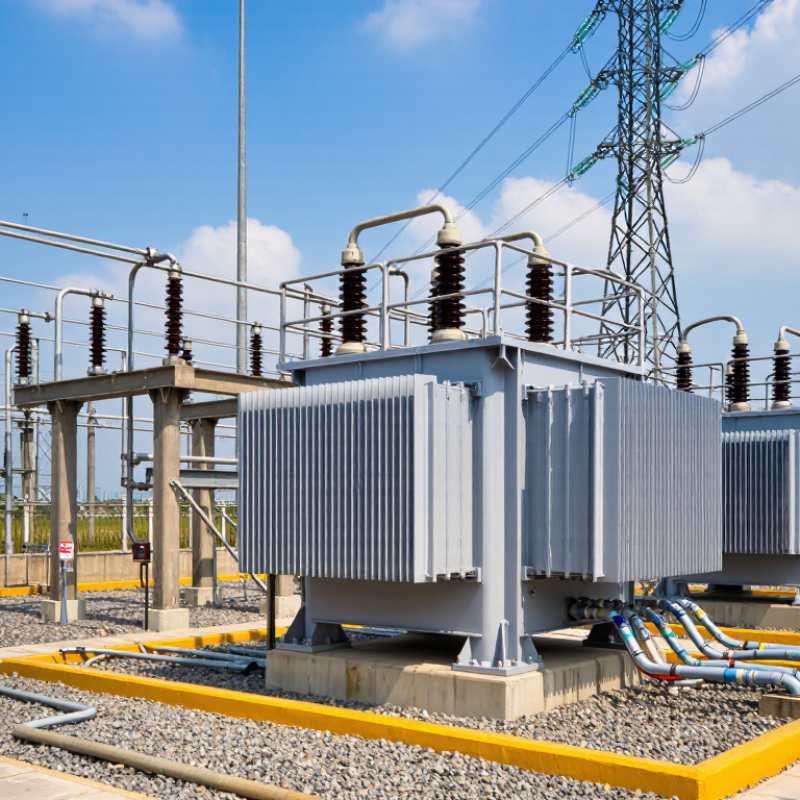
A powerline transformer is a distribution device that changes voltage between utility lines and local electrical systems. A pole-mounted unit may serve a few nearby buildings; a larger pad-mounted unit can supply a site with heavier demand. Its core and two windings do the work. Alternating current in the primary winding creates a changing magnetic field in the steel core, inducing voltage in the secondary winding. The turns ratio determines whether voltage rises or falls. Simple in principle.
The U.S. Energy Information Administration reports that roughly 5% of electricity is lost during transmission and distribution. That figure includes losses across the wider grid, not just transformers. A correctly sized transformer helps match supply voltage to the load, but it cannot eliminate losses. Load profile, ambient temperature, installation conditions, and expected growth all matter. A unit selected only by today’s peak demand may leave little room for tomorrow.
Tips: Confirm primary and secondary voltages, load in kVA, phase, and environmental conditions with a qualified electrical professional. Check nameplate ratings before installation. Small details matter. And the sizing process is not always neat; measured demand can differ from planning estimates, so verify assumptions rather than treating them as facts.
How to Match a Transformer to Your Project’s Power Needs
Why Choose a Powerline Transformer for Your Project?
How to Match a Transformer to Your Project’s Power Needs
Choosing a transformer starts with a clear picture of the loads it will serve. List each major device, its rated voltage, and its expected operating hours. Then estimate the demand that may occur when equipment runs together. A workshop’s motors, for example, can draw a brief surge during startup. Small detail. That surge matters.
Compare the calculated demand with the transformer’s kVA rating, while checking primary and secondary voltages and single-phase or three-phase supply. Allow for starting current, future equipment, and local temperature conditions. Long cable runs can also cause voltage drop, so the transformer rating alone may not solve every power issue. Harmonic-producing equipment may need extra review.
Load estimates are rarely perfect. A plan built from today’s equipment can miss seasonal use or one machine added later. Leave a sensible capacity margin, but avoid oversizing without reason; it can increase cost and reduce efficiency under light loads. Confirm the utility’s connection requirements and have a qualified electrical professional review the design before selection. Check the site conditions, too. Dust, moisture, and limited ventilation can affect installation choices.
Why Choose a Powerline Transformer for Your Project?
Match Transformer Capacity to Your Project’s Power Needs
A transformer rated at 500 kVA can deliver different amounts of real power depending on the load’s power factor. The values below use the relationship kW = kVA × power factor. Compare your project’s expected demand with the available capacity, and allow for applicable design margins and local requirements.
Key Benefits of Choosing a Powerline Transformer
A powerline transformer adjusts voltage between transmission and distribution networks, helping electricity reach equipment at usable levels. Its key benefit is dependable voltage conversion, matched to the project’s load and operating conditions. Correct sizing can help limit avoidable losses and reduce overheating risk. Practical details matter: expected peak demand, voltage class, impedance, cooling method, insulation, and outdoor exposure all affect selection. Fit matters.
The International Energy Agency’s 2023 report, Electricity Grids and Secure Energy Transitions, says annual grid investment needs to rise from about US$300 billion to more than US$600 billion by 2030. It also estimates that 80 million kilometres of grids must be added or refurbished by 2040. These figures underline the scale of grid upgrades, though they do not guarantee a transformer will suit any specific project. A careful specification should use verified load data and account for future expansion, fault levels, and maintenance access. Oversizing can add cost; undersizing can constrain growth. That trade-off deserves a second look. The best choice depends on site conditions and a qualified engineering review.
Safety, Efficiency, and Reliability Factors to Consider
A powerline transformer must protect people and equipment while handling the demands of its location. Safety starts with correct voltage ratings, insulation, grounding, and protective devices matched to the installation. Clearances and access for maintenance matter too. Small details matter. A loose connection can heat up long before a visible failure appears. Have qualified personnel review the design and installation, especially where loads or site conditions may change.
Efficiency is more than a low-loss figure on a specification sheet. Ask how the transformer will perform at the project’s usual load, not only at its rated capacity. For example, a unit that runs lightly loaded for most of the day may waste energy through constant core losses. Measure actual operating patterns where possible. Not just peak demand. A slightly higher purchase price can sometimes be offset by lower energy losses over years of service, though the result depends on local load and operating costs.
Reliability depends on sound construction, suitable environmental protection, and a realistic maintenance plan. Check for unusual noise, vibration, temperature changes, and signs of moisture. For oil-filled units, inspections should also follow the manufacturer’s guidance. These checks are useful, but they cannot prevent every fault. It is easy to focus only on upfront cost; that can leave little room for monitoring or spare capacity. A design can look perfect on paper and still need adjustment once real operating data arrives.
Common Projects That Use Powerline Transformers
Powerline transformers are used in projects that need electricity delivered at a practical, stable voltage. Common examples include rural feeder extensions, commercial building upgrades, industrial workshops, and new housing developments. On a rural line, a transformer may serve a small group of homes spread across long distances. At a workshop, it can supply equipment with different voltage requirements. The right unit depends on load, expected growth, and site conditions—not just the building’s size. Small details matter.
Tips: Record peak and typical loads, motor-starting demands, and future equipment plans before choosing a transformer. Check available space, ventilation, weather exposure, and how technicians will access the installation. Have a qualified electrical professional verify voltage, capacity, protection, and grounding needs.
Renewable energy and infrastructure projects may also use powerline transformers. Solar or wind installations can require voltage adjustment where generation connects with a local distribution system. Water facilities and transport sites may need dependable power for pumps, controls, or lighting. A common planning mistake is sizing only for today’s demand. Yet oversizing can add cost and create its own operating considerations. Project conditions vary, so confirm the design against measured loads and the utility’s connection requirements. I have seen early estimates miss seasonal peaks; site data is worth the extra effort.