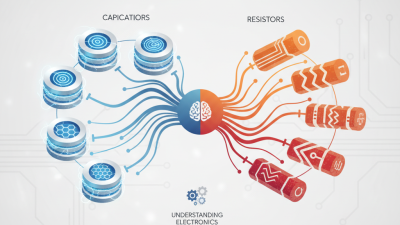
Why Are Electronic Capacitors Important for Global Buyers?
Electronic capacitors quietly support nearly every modern electrical system. They store energy, smooth voltage, reduce electrical noise, and help circuits respond quickly. A failed capacitor can stop a motor, distort a signal, or shorten a product’s service life. For global buyers, this small component deserves serious attention.
Professor Patrice Simon, a recognized supercapacitor researcher, has explained, “Supercapacitors are not a replacement for batteries; they complement them.” This distinction matters. Batteries provide sustained energy, while electronic capacitors handle sudden power demands. In an industrial control cabinet, for example, a capacitor may absorb a voltage spike within milliseconds. In an electric vehicle, it can support acceleration and regenerative braking.
Specifications tell only part of the story. Buyers should examine capacitance, voltage rating, equivalent series resistance, ripple current, temperature range, and expected lifetime. Packaging also matters. A component that fits one assembly may fail another because of vibration, humidity, or limited cooling. Certification and traceability remain essential across international supply chains. So does supplier consistency.
Small detail. Large consequence.
In practical sourcing, the lowest unit price can become expensive after premature failures, rejected batches, or delayed production. Yet procurement teams can also over-specify components and waste budget. That is an uncomfortable point. The best choice depends on the circuit, operating environment, reliability target, and total ownership cost. Careful testing, supplier audits, and clear documentation help global buyers make decisions they can defend. Electronic capacitors are not merely passive parts; they are reliability decisions hidden inside a product.
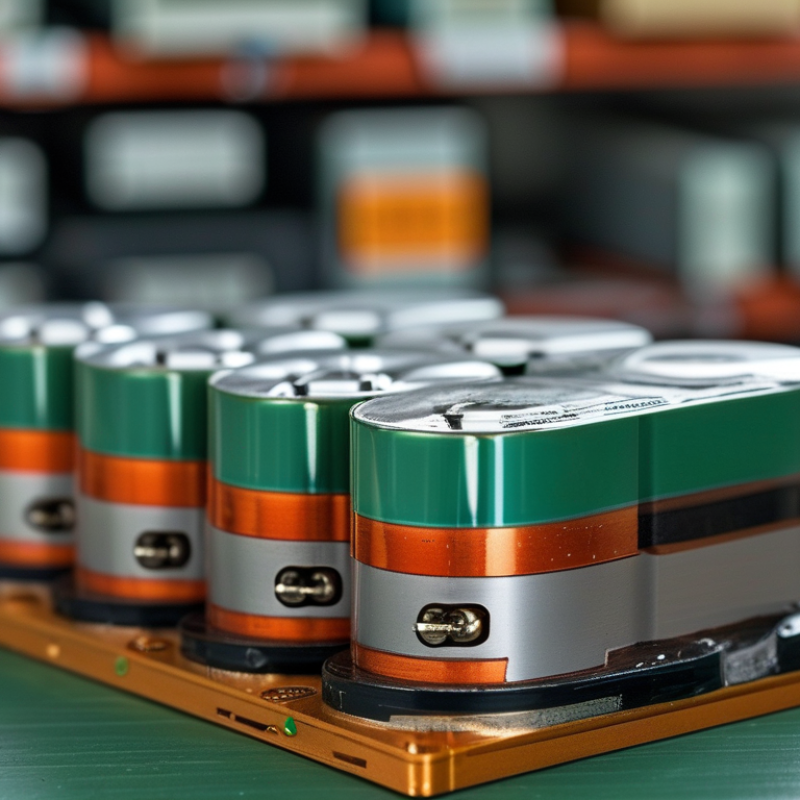
Electronic capacitors are passive components that store electrical energy in an electric field. They usually contain two conductive plates separated by an insulating dielectric material. When voltage reaches the plates, opposite charges collect on each side. The dielectric prevents direct current from crossing the gap.
Their behavior depends on capacitance, voltage rating, temperature, and frequency. A larger capacitance can store more charge, but physical size and response speed may change. In a circuit, capacitors smooth voltage after rectification, reduce unwanted electrical noise, and provide short bursts of energy when a load suddenly changes. Small capacitors placed near integrated circuits can absorb rapid voltage disturbances before they spread through the board. That small detail matters.
The simple explanation is useful. It is not complete. Real capacitors have equivalent series resistance, leakage current, and limited service lives. Their capacitance can also shift with temperature, applied voltage, or aging. Global buyers should review ripple-current capability, tolerance, insulation performance, operating temperature, and verified safety documentation. A component that works in a quiet laboratory may fail in a hot cabinet with constant vibration. I have seen specifications look acceptable until frequency and heat were considered together. That is an easy mistake. Careful testing, traceable quality records, and clear technical communication help buyers choose capacitors that perform reliably across different equipment and markets.
Global buyers need different capacitor types because each design stresses components differently. The right choice depends on voltage, ripple current, temperature, size, and service life.
Multilayer ceramic capacitors, or MLCCs, suit compact electronics, communications equipment, and automotive control units. The 2024 Yole Group analysis of the MLCC industry identifies automotive electrification and advanced electronics as major demand drivers. MLCCs offer low equivalent series resistance and fast response. However, their capacitance can fall under high DC voltage. This detail is easy to miss.
Aluminum electrolytic capacitors remain practical for power supplies, industrial drives, and energy storage. They provide high capacitance at relatively low cost, but heat and aging can shorten their working life. Film capacitors are stronger candidates for inverters, solar systems, and electric-drive applications. They handle high voltage and offer stable performance, though their physical size may challenge compact designs. Tantalum capacitors support space-sensitive circuits requiring stable capacitance, but buyers must review surge-current limits carefully. Supercapacitors serve short-duration backup and peak-power functions, not ordinary filtering alone. They are useful, but often misunderstood.
MarketsandMarkets reported that ceramic capacitors represented the largest segment in its 2023 capacitors market analysis. The same report also links demand growth to automotive electronics, telecommunications, and renewable-energy systems. Global purchasers should therefore compare lifecycle data, derating curves, failure rates, and regional compliance documents. A low unit price can become expensive after field failures. Specification sheets help, but real operating conditions matter more.
Electronic capacitors are essential because modern devices need stable, controlled electrical energy. A capacitor stores charge and releases it when circuits demand extra power. In a laptop, it can smooth voltage near a processor during sudden workload changes. In a camera, it helps reduce noise that could distort an image. Small parts, major effects.
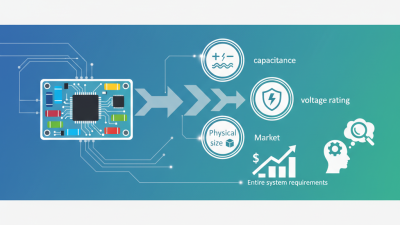
Engineers also use capacitors to filter unwanted signals, separate audio frequencies, and protect sensitive control circuits. During practical testing, a poorly selected capacitor may become hot, produce unstable output, or shorten a device’s operating life. Its capacitance, voltage rating, equivalent series resistance, and temperature range must match the circuit. Physical size matters too. A compact circuit board leaves little room for error.
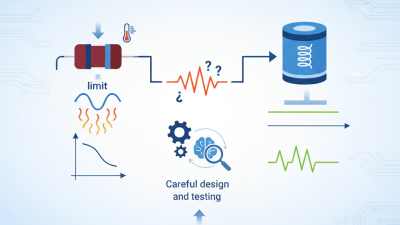
Global buyers should inspect technical documents, test reports, and production consistency before placing large orders. Capacitors can age under heat, vibration, humidity, and repeated electrical stress. That detail is easy to overlook. I have found that a part performing well in a cool laboratory may behave differently inside a sealed power adapter. Reliable sourcing therefore requires sample testing, traceable specifications, and clear quality controls. Even then, selection is not perfect; engineers may need to balance cost, lifespan, safety margins, and available space.
Global buyers should treat capacitors as performance-critical components, not low-cost catalogue items. The International Energy Agency’s Global EV Outlook 2024 reported nearly 14 million electric car sales in 2023. This growth increases demand for reliable DC-link, filtering, and power-management capacitors. Mordor Intelligence’s 2024 Capacitors Market analysis also projects steady market expansion through 2029, although estimates differ by product scope.
Start with electrical requirements. Check capacitance tolerance, rated voltage, ripple current, ESR, leakage current, and operating temperature. Voltage derating matters. A capacitor rated for 400 volts may not be suitable near that limit continuously. In industrial equipment, heat, vibration, and frequent power cycling can shorten service life. Ask suppliers for lifetime calculations at the actual temperature profile, not only room-temperature figures.
Then examine compliance and supply reliability. The IEC 60384 series provides useful requirements for many fixed capacitors, while AEC-Q200 testing is relevant for automotive applications. Request test reports, material declarations, batch traceability, and change-notification procedures. Confirm whether certificates cover the exact series and factory. They often do not.
Also compare lead times, minimum order quantities, packaging controls, and approved second sources. A low unit price can become expensive after requalification or field failures.
I have found that sourcing checklists look complete, yet rarely test supplier communication during an urgent design change. That weakness deserves attention.
Why Are Electronic Capacitors Important for Global Buyers?
How Do Capacitors Affect Product Performance, Cost, and Reliability?
Electronic capacitors stabilize voltage, reduce electrical noise, and store short bursts of energy. In a power supply, the correct capacitor can prevent visible flicker, random resets, and unwanted audio interference. Engineers usually check capacitance, voltage rating, equivalent series resistance, and ripple-current capability. Small details matter. A part rated for 105°C may perform better near a hot transformer than one rated for 85°C.
Capacitor selection also changes product cost. A cheaper component may reduce the initial bill, but it can require larger heat sinks, extra filtering, or earlier field service. Buyers should compare the full cost, not only the unit price. Packaging, minimum order quantities, testing, and delivery distance also affect the final figure. One overlooked issue is derating. Operating a capacitor close to its voltage limit may appear acceptable during testing, yet create faster aging in daily use.
Reliability depends on the application and the supplier’s process. Buyers can request inspection records, batch identification, electrical test data, and clear storage instructions. These documents support traceability when performance changes across shipments. However, paperwork cannot replace practical evaluation. A capacitor may pass laboratory checks but behave differently inside a tightly packed enclosure. Heat changes everything. I have seen purchasing decisions focus heavily on price while ignoring airflow, vibration, and repair access. That approach deserves reconsideration, especially for equipment expected to operate continuously.
| Capacitor Type | Typical Capacitance Range | Typical Voltage Range | Key Performance Characteristics | Common Product Applications | Cost Considerations | Reliability and Service-Life Factors | Buyer Evaluation Priorities |
|---|---|---|---|---|---|---|---|
| Ceramic MLCC | Approximately 1 pF to 100 µF | 6.3 V to 3 kV | Very low ESR and ESL, fast response, compact size, and strong high-frequency noise suppression. | Mobile electronics, control boards, power supplies, automotive electronics, and communication equipment. | Generally low unit cost in high-volume production. Higher capacitance, tighter tolerances, and higher voltage ratings increase cost. | High reliability when voltage, temperature, and mechanical stress are properly controlled. DC-bias effects can reduce effective capacitance in some ceramic classes. | Check dielectric type, effective capacitance under operating voltage, tolerance, cracking resistance, and approved operating temperature. |
| Aluminum Electrolytic | Approximately 0.47 µF to 100,000 µF | 6.3 V to 630 V | High capacitance per unit volume and effective bulk energy storage for filtering and smoothing. | AC-to-DC power supplies, industrial controls, audio equipment, LED drivers, and motor drives. | Cost-effective for high-capacitance applications. Higher ripple-current capability, longer-life designs, and higher temperature ratings typically cost more. | Service life is affected by temperature, ripple current, and voltage. Rated life is commonly specified in hours at a defined temperature and ripple load. | Compare rated life, ripple-current rating, temperature rating, leakage current, vent design, and end-of-life requirements. |
| Polymer Aluminum | Approximately 2.2 µF to 2,700 µF | 2.5 V to 100 V | Low ESR, high ripple-current capability, and stable performance during rapid load changes. | Voltage regulators, processors, telecommunications equipment, and compact power-conversion systems. | Usually more expensive than standard aluminum electrolytics, but may reduce the need for additional filtering components. | Good resistance to electrolyte drying and strong electrical stability. Voltage derating and temperature limits must still be observed. | Evaluate ESR over temperature, ripple-current capability, voltage derating, leakage current, and size constraints. |
| Film | Approximately 1 nF to 1,000 µF | 50 V to several kV | Low dielectric losses, stable capacitance, strong pulse handling, and good self-healing behavior in many constructions. | EMI suppression, motor capacitors, DC-link circuits, snubber networks, inverters, and power-factor correction. | Higher material and assembly cost than many ceramic or electrolytic options, especially for high capacitance and high-voltage designs. | Long service life and strong thermal stability when operated within rated voltage, temperature, and ripple limits. | Check film material, pulse capability, insulation class, humidity resistance, self-healing characteristics, and enclosure requirements. |
| Tantalum | Approximately 0.1 µF to 2,200 µF | 2.5 V to 125 V | High volumetric efficiency, stable capacitance, and low leakage compared with many wet electrolytic designs. | Portable electronics, industrial control boards, telecommunications, and space-constrained circuit assemblies. | Typically costs more than standard ceramic and aluminum electrolytic capacitors. Higher reliability grades and specialized case sizes add cost. | Requires careful voltage derating and surge-current control. Excessive electrical stress can cause sudden failure. | Review derating rules, surge testing, leakage current, temperature range, failure mode, and qualification requirements. |
| Supercapacitor | Approximately 0.1 F to several thousand farads | Usually below 5 V per cell | Very high energy storage, high power delivery, and much higher cycle life than conventional rechargeable batteries. | Memory backup, regenerative braking, energy harvesting, emergency power, and short-duration ride-through systems. | Higher initial cost per component and additional balancing or control circuitry may be required for series-connected cells. | Long cycle life, but leakage current, operating temperature, cell balancing, and voltage management strongly affect durability. | Compare capacitance tolerance, leakage current, ESR, cycle rating, balancing method, safety requirements, and storage conditions. |
| AC Motor-Run Capacitor | Approximately 1 µF to 100 µF | 200 VAC to 500 VAC | Designed for continuous AC operation, phase shifting, and motor efficiency improvement. | Fans, pumps, compressors, air-conditioning systems, and single-phase induction motors. | Cost depends on capacitance, voltage class, enclosure, terminals, temperature rating, and certification requirements. | Continuous AC rating, temperature rise, humidity resistance, and protection against overpressure are important for safe operation. | Verify capacitance tolerance, continuous-duty rating, ambient temperature, mounting method, safety approvals, and terminal quality. |
| Safety-Rated EMI Capacitor | Approximately 1 nF to 10 µF | 250 VAC to 1,000 VAC, depending on class | Reduces conducted electromagnetic interference while providing defined insulation behavior. | Power supplies, appliances, industrial equipment, chargers, and mains-connected electronic products. | Certified safety construction and testing increase cost compared with general-purpose capacitors. | Designed to maintain safe failure behavior under line transients. Incorrect substitution can create shock or fire hazards. | Confirm safety class, insulation rating, impulse withstand capability, certification documentation, humidity category, and placement in the circuit. |