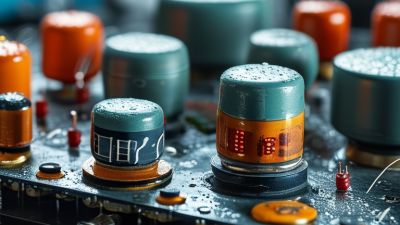
Choosing China’s best passive electronic components suppliers requires more than comparing prices or browsing polished catalogs. Capacitors, resistors, inductors, and filters can look similar on a product page, yet differ in tolerance, temperature range, reliability, and documented performance. A small specification gap may affect an entire circuit.
China’s supplier base includes manufacturers, distributors, and trading companies, each with different strengths. Some offer broad catalogs and fast sampling; others focus on particular component types or custom production. Buyers should check traceable datasheets, product markings, quality certificates, and the actual scope of any stated certification. Ask whether samples come from the same production process as future orders. A sample that works on a bench is useful, but it does not prove consistent batch quality.
Details matter. Compare capacitance tolerance, rated voltage, package size, operating temperature, and lead time against your design requirements. Request written answers about inspection methods, change control, and how defects are handled. Where possible, review audit records or arrange an independent factory assessment. Keep specifications and approvals in writing.
No shortlist is perfect. Supplier directories can help identify candidates, but listings alone do not verify manufacturing capability or product authenticity. A careful evaluation balances price with technical support, communication, delivery performance, and evidence of quality systems. This guide examines how to assess China-based suppliers of passive electronic components, what questions to ask, and which warning signs deserve a closer look. Some checks take time. That is usually time well spent.

Passive electronic components control, store, or filter electrical energy without amplifying it. They are small, but their behavior shapes how a circuit performs. Resistors limit current and divide voltage. Capacitors store charge and help smooth supply fluctuations. Inductors resist rapid changes in current and can filter unwanted signals. Small parts, important work.
On a circuit board, a capacitor placed near a processor’s power pin can reduce brief voltage dips. A resistor may set the current for an indicator light, while an inductor in a power converter helps transfer energy between circuit stages. Ferrite beads can suppress high-frequency interference on power or signal lines. The exact result depends on the circuit, not just the component label.
Selecting a part means checking more than its nominal value. A resistor’s power rating matters if it will run warm; a capacitor’s voltage rating and tolerance also affect suitability. Temperature, board space, and operating frequency can change performance. A tidy schematic can hide layout problems, and that is easy to overlook. Datasheets provide useful limits, though real designs still need testing under their expected operating conditions.
China’s passive-component supply industry is a layered network, not a single factory market. Material processors supply ceramic powders, metal films, copper foil, ferrite, and packaging materials. Component manufacturers turn these inputs into resistors, capacitors, inductors, and related parts, often specializing by process or package size. Production is concentrated in manufacturing regions, but capabilities vary between plants. Some focus on high-volume standard parts; others handle tighter tolerances or custom dimensions. That distinction matters. Factory location alone says little about process control, production yield, or engineering support.
Downstream, distributors combine products from multiple manufacturers and help buyers manage inventory and delivery. Contract manufacturers and equipment makers then select components according to performance, cost, and supply continuity. Paperwork matters. Buyers should compare datasheets, test reports, lot traceability, sample results, and stated lead times—not just quoted prices. An RFQ should specify operating temperature, voltage, tolerance, package, and expected volume. Ask for current production samples. Some suppliers may describe capabilities broadly, while evidence for a particular specification is less clear. A factory visit can help, but it cannot replace checking records and testing parts under real operating conditions. Even a careful supplier review can miss a weak point.
China Best Passive Electronic Components Suppliers?
Key Factors for Evaluating Chinese Component Suppliers
A reliable supplier should provide clear specifications, current test reports, and traceable lot information. Check whether dimensions, tolerance, temperature range, and rated voltage match your design. Ask how incoming materials and finished components are inspected. Details matter.
A sample is useful, but it cannot prove consistent production quality. Compare sample measurements with inspection records from multiple production lots. Ask about process controls, failure analysis, and how quality issues are documented. Request evidence, not just assurances. If reports lack dates or test conditions, ask for clarification before approving a component.
Capacity and communication also deserve close review. Confirm production lead times, minimum order quantities, packaging methods, and procedures for notifying customers about specification changes. A supplier that answers technical questions precisely can make qualification easier. Still, quick replies are not proof of manufacturing strength. Verify claims through documents, samples, and, where practical, a production-site assessment. No single checklist catches every risk; even a careful review may miss problems that appear only after extended use.
A useful supplier comparison starts with the parts your design actually needs, not the size of a catalog. List required resistors, capacitors, inductors, and ferrite components, then compare available values, package sizes, tolerances, and temperature ratings. Broad catalogs can still hide gaps. Ask whether the supplier supports custom specifications, sample orders, and engineering questions, and check how clearly those services are described.
For China-based sourcing, confirm which production site makes each part and whether technical support comes from the factory or an intermediary. Review datasheets, test reports, and quality procedures; request samples when practical. Compare quoted lead times with production capacity, and ask how the supplier handles material changes and product lifecycle updates.
Small details matter. On the bench, a capacitor that fits the footprint but misses the temperature range is not a useful match.
No scorecard is perfect. I would avoid choosing by price or catalog breadth alone; a supplier’s documentation may look strong while response times vary. The best fit is the one whose range, technical support, and production consistency match your application.
Selecting a passive-component supplier starts with a precise specification: capacitance, tolerance, voltage rating, temperature range, and expected service life. Compare each supplier’s datasheets against those requirements, rather than relying on product descriptions alone. Ask for evidence. Request sample parts and inspect markings, dimensions, and packaging. For capacitors and inductors, check that test reports identify the same part number and revision as the samples. Small details matter.
Next, review how the supplier controls quality. Ask about incoming-material checks, production testing, lot traceability, and procedures for notifying customers about design or process changes. A factory visit can reveal practical details, such as whether measuring instruments are calibrated and whether rejected parts are separated from approved stock. If a visit is not possible, request recent audit records and sample inspection reports. Verify claimed certifications with the issuing organization, and confirm that their scope covers the relevant production site.
Compare lead times using real order quantities and delivery schedules, not broad promises. Ask how shortages are handled and whether substitutions require written approval. A low price may look attractive, but unstable sourcing or inconsistent batches can cost more later. No checklist removes every risk; even a careful sample review cannot predict every production issue. Start with a limited order, record incoming inspection results, and keep the findings beside the supplier’s documentation.
| Verification Stage | Evaluation Dimension | Evidence to Request | How to Verify | Decision Indicator | Suggested Weight |
|---|---|---|---|---|---|
| 1. Initial screening | Business identity and product scope | Business registration details, manufacturing or distribution scope, product-family list, and authorized sales-channel documentation where applicable. | Check that the legal entity, quoted entity, payment beneficiary, and contracting party are consistent. Confirm whether the supplier manufactures the parts or resells them. | Proceed only when the entity and supply role are clear and can be documented. | 10% |
| 2. Quality-system review | Quality management and corrective action | Quality-system certificate, certificate scope and validity, process-control overview, inspection records, and examples of corrective-action reports. | Verify the certificate with its issuing body and confirm that its scope covers the relevant site and activities. Review how nonconforming product and customer complaints are handled. | Prefer a current, independently verifiable quality-system certificate and evidence of a functioning corrective-action process. | 15% |
| 3. Technical qualification | Part specifications and application fit | Datasheets, drawings, material declarations, electrical and environmental ratings, tolerances, and applicable qualification reports. | Compare the exact part number and revision against the design requirements. Check relevant parameters such as capacitance, resistance, inductance, tolerance, voltage, temperature range, ESR, or DCR, as applicable. | Accept only parts whose documented ratings and test conditions meet the intended application and applicable design requirements. | 20% |
| 4. Compliance review | Environmental and industry requirements | Product-specific declarations and supporting compliance documents for requirements such as RoHS or REACH, when applicable. | Check that documents identify the relevant part or product family, are current, and match the regulations and markets applicable to the project. For automotive use, request relevant AEC-Q200 qualification evidence where required; AEC-Q200 is a component qualification standard, not a supplier certification. | Do not treat a general company statement as proof of compliance for a specific component or market. | 10% |
| 5. Traceability and authenticity | Lot control, change management, and product provenance | Sample labels, lot or date-code records, certificates of conformance, traceability procedures, and product-change or end-of-life notification procedures. | Ask the supplier to trace a sample lot from incoming materials or source records through inspection and shipment. Confirm how substitutions and product changes are approved and communicated. | Require consistent lot identification and documented traceability; reject unexplained substitutions or unverifiable sourcing. | 15% |
| 6. Sample evaluation | Product and process consistency | Production-representative samples, inspection results, test conditions, and a sample approval or failure-analysis process. | Test samples using methods appropriate to the component type and application. Compare measured values with the datasheet and agreed acceptance limits; use an independent laboratory when risk warrants it. | Approve samples only after results meet the agreed specification and any required application-level validation. | 10% |
| 7. Operational capability | Capacity, lead time, and continuity of supply | Capacity information, quoted lead times, minimum order quantities, production or sourcing locations, inventory policy, and continuity plans. | Compare commitments with forecast demand. Ask how shortages, allocation, long lead times, and production interruptions are managed; confirm whether lead times are estimates or contractual commitments. | Choose a supplier whose documented capacity and continuity arrangements fit the project’s demand and risk profile. | 10% |
| 8. Commercial review | Pricing, terms, and communication | Formal quotation, currency and validity period, payment and delivery terms, warranty or return terms, and named technical and quality contacts. | Compare like-for-like part numbers, revisions, quantities, packaging, delivery terms, and compliance scope. Clarify how price changes and quality disputes are handled. | Evaluate total cost and responsiveness alongside technical and quality performance; avoid selecting on price alone. | 5% |
| 9. Final selection | Documented supplier score and approval | Completed evaluation records, risk assessment, sample results, approved-part list entry, and any corrective actions or conditions. | Score each dimension against the project’s needs, record evidence and open issues, and obtain approval from relevant engineering, quality, and purchasing stakeholders. | Approve only when mandatory technical, compliance, and traceability requirements are met and remaining risks have an owner and mitigation plan. | 5% |
| Total suggested evaluation weight | 100% | ||||
Suggested evaluation framework only. Adjust the weighting and acceptance criteria to the component type, application, destination market, and project risk.