
News / Blog
China Top Passive Components Suppliers for Global Buyers
China has become a critical sourcing base for passive components used in vehicles, smartphones, industrial controls, and renewable-energy systems. Its dense manufacturing ecosystem supports ceramic capacitors, aluminum electrolytic capacitors, inductors, resistors, and circuit protection devices. Shenzhen, Dongguan, Suzhou, and Guangdong host extensive supplier networks, testing laboratories, and export infrastructure.
Market data confirms the sector’s scale. Grand View Research estimates that the global passive electronic components market will continue expanding through 2030, supported by electrification, 5G infrastructure, and connected devices. Mordor Intelligence also identifies automotive electronics, consumer devices, and industrial automation as major demand drivers. These reports differ in market definitions and forecasts. That matters.
Reliable supplier selection requires more than comparing unit prices. Global buyers should examine production capacity, material traceability, failure-rate records, and documented quality systems. ISO 9001 certification is useful, while automotive buyers may require IATF 16949 and AEC-Q200 compliance. Factory audits can reveal practical details, such as humidity controls, reel labeling, inspection frequency, and warehouse conditions.
Delivery performance deserves equal attention. A supplier may offer a competitive quotation, yet struggle during copper-price changes or sudden demand increases. Ask for sample approval records, lot-level inspection reports, and realistic lead-time commitments. Check whether technical support responds clearly in English.
This guide examines China’s leading passive components suppliers for international buyers. It considers product breadth, engineering capability, certifications, export experience, and supply stability. Rankings are never permanent. Smaller manufacturers can improve quickly, while established suppliers may still have weaknesses. Careful verification remains essential.
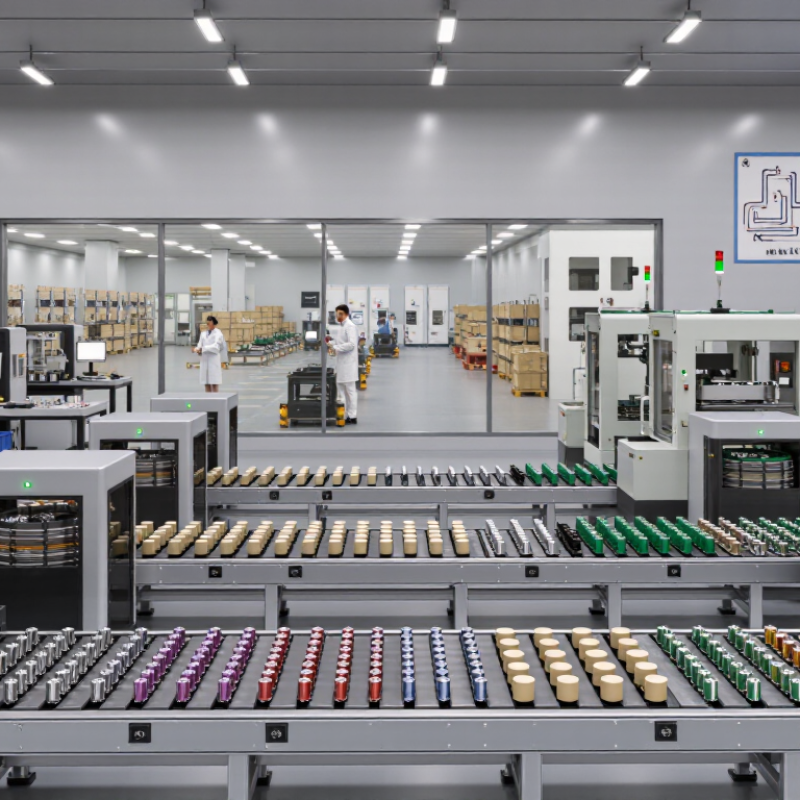
What Passive Components Include in China’s Supply Landscape
China’s passive-component supply landscape covers resistors, capacitors, inductors, transformers, filters, thermistors, varistors, and potentiometers. These parts store, limit, filter, or redirect electrical energy. They contain no active gain stage, yet they shape circuit stability. The category is not as tidy as a spreadsheet.
A 2024 Mordor Intelligence report estimates the global passive electronic components market will grow at over 5% annually through 2029. China remains a major manufacturing base, especially for multilayer ceramic capacitors, aluminum electrolytic capacitors, chip resistors, and magnetic components. Market reports differ in scope. That matters. Some include modules, while others count only individual components.
For global buyers, China’s supply landscape is best assessed by application and qualification level. Consumer electronics may prioritize cost, volume, and short lead times. Automotive and industrial projects require tighter traceability, temperature ratings, endurance testing, and change-control procedures. IEC 60384 remains important for many capacitor categories, while AEC-Q200 is widely referenced for automotive passive components. A strong supplier should provide datasheets, lot records, test conditions, and material declarations. Samples are not enough. A small tolerance drift can affect a power circuit after months of operation. Supply concentration is another concern, particularly for high-demand capacitor sizes. Buyers should compare approved alternatives before production. The process can feel slower than expected, but that delay may expose weak documentation early.
China Top Passive Components Suppliers for Global Buyers - What Passive Components Include in China’s Supply Landscape
| Component Category | Common Product Types | Primary Electrical Function | Typical Materials | Typical Manufacturing Processes | Common End Uses | Key Buyer Quality Checks | Relevant Standards |
|---|---|---|---|---|---|---|---|
| Fixed Resistors | Thick-film chip, thin-film chip, carbon-film, metal-oxide and wirewound resistors | Limit current, divide voltage and establish bias conditions | Alumina ceramic, resistive films, nickel or tin terminations, copper wire for wirewound types | Film printing or deposition, trimming, electrode formation, coating and laser marking | Consumer electronics, industrial controls, power supplies, automotive electronics and instrumentation | Resistance value, tolerance, temperature coefficient, rated power, surge performance and solderability | IEC 60115 series; RoHS and REACH requirements where applicable |
| Ceramic Capacitors | Multilayer ceramic capacitors, single-layer ceramic capacitors and safety-rated ceramic capacitors | Store electrical energy, decouple power rails, filter noise and tune circuits | Barium-titanate-based ceramic dielectric, nickel internal electrodes and metal end terminations | Powder preparation, dielectric tape casting, multilayer stacking, lamination, sintering and termination plating | Mobile devices, computing equipment, lighting, automotive systems and industrial electronics | Capacitance, tolerance, rated voltage, insulation resistance, dissipation factor, DC-bias behavior and flex cracking | IEC 60384-1 and IEC 60384-8; applicable safety requirements for certified safety capacitors |
| Aluminum Electrolytic Capacitors | Radial-lead, snap-in, screw-terminal, polymer and surface-mount types | Provide high capacitance for filtering, smoothing and energy buffering | Etched and formed aluminum foil, separator paper, electrolyte, aluminum can and rubber seal | Electrochemical etching, anodic forming, winding, electrolyte impregnation, sealing and aging | AC-DC power supplies, motor drives, renewable-energy equipment, audio systems and industrial controls | Capacitance, leakage current, ESR, ripple-current rating, endurance life, temperature rating and vent integrity | IEC 60384-1 and IEC 60384-4; life testing should follow the specified temperature and load conditions |
| Film Capacitors | Polypropylene, polyester, metallized-film, box, radial-lead and safety-film capacitors | AC filtering, pulse handling, snubbing, timing and power-factor correction | Polypropylene or polyester dielectric film, vacuum-deposited metal, aluminum foil and epoxy or plastic cases | Film stretching, metallization, winding, flat pressing, encapsulation and self-healing conditioning | Inverters, motor controls, lighting, appliances, EMI filters and power-conversion equipment | Capacitance, AC and DC voltage rating, insulation resistance, dissipation factor, pulse capability and flammability | IEC 60384-1; relevant IEC 60384-14 or IEC 61071 requirements depending on application |
| Inductors and Chokes | Multilayer chip inductors, wirewound inductors, power inductors, common-mode chokes and ferrite beads | Store magnetic energy, oppose changes in current and suppress differential or common-mode noise | Copper wire, ferrite or powdered-iron cores, ceramic bodies, magnetic composites and plated terminals | Core pressing, winding, multilayer printing, sintering, molding, assembly and terminal plating | Switch-mode power supplies, telecommunications, automotive electronics, LED drivers and signal interfaces | Inductance, impedance, saturation current, rated current, DC resistance, temperature rise and shielding effectiveness | IEC 62024 series for high-frequency characteristics; IEC 62317 series for ferrite cores where applicable |
| Magnetic Transformers | Power transformers, signal transformers, isolation transformers, current transformers and high-frequency transformers | Transfer energy magnetically, change voltage levels and provide galvanic isolation | Ferrite, laminated steel or nanocrystalline cores, copper windings, insulation tape and molded or boxed housings | Core preparation, automated winding, insulation, bobbin assembly, impregnation, soldering and electrical testing | Chargers, adapters, industrial power supplies, networking equipment, meters and control systems | Turns ratio, efficiency, insulation resistance, dielectric withstand, temperature rise, no-load current and creepage distances | IEC 61558 series for safety transformers; IEC 60601-1 may apply to medical equipment |
| Varistors and Thermistors | Metal-oxide varistors, NTC inrush-current limiters and PTC resettable protection devices | Protect against transient overvoltage, limit inrush current or provide temperature-dependent resistance | Zinc-oxide ceramic, manganese or nickel oxide ceramics, polymer compounds and metal electrodes | Ceramic powder mixing, pressing, sintering, electrode application, coating and thermal conditioning | Power entry modules, appliances, HVAC systems, battery packs, automotive systems and industrial equipment | Clamping voltage, energy rating, leakage current, resistance-temperature curve, trip behavior and cycling endurance | IEC 61051 for varistors; IEC 60539 for thermistors where applicable |
| EMI Filters and Passive Filter Modules | Single- and three-phase filters, feed-through filters, LC filters and common-mode filter assemblies | Reduce conducted electromagnetic interference while allowing desired power or signal frequencies to pass | Capacitors, inductors, ferrite materials, copper conductors, metal cases and insulating compounds | Component assembly, winding, soldering or crimping, enclosure fabrication, potting and insertion-loss testing | Industrial automation, medical equipment, data centers, renewable-energy systems and consumer appliances | Insertion loss, leakage current, rated voltage and current, dielectric withstand, grounding continuity and thermal performance | IEC 60939 series; applicable EMC requirements depend on the final equipment and installation environment |
Related Posts
-
Top Passive Components You Need to Know for Your Electronics Projects
-
What Are China Top Passive Electronic Components?
-
Why Are Passive Components Essential in Electronic Circuits?
-
What Are Passive Components and How Do They Work in Electronics?
-
Essential Tips for Sourcing Passive Components Efficiently?
-
How to Select the Right Passive Components for Your Electronic Projects