
News / Blog
China Top 10 Electronics Marketplaces for Global Buyers
China’s electronics marketplace landscape is broad, fast-moving, and difficult to judge from product photos alone. Global buyers may find smartphones, components, smart-home devices, cables, and factory-direct equipment within minutes. Yet product quality, seller reliability, warranty terms, and export experience can vary sharply.
This guide examines ten leading Chinese platforms, including Alibaba.com, AliExpress, JD.com, Tmall, Taobao, 1688, DHgate, Made-in-China.com, Global Sources, and Yiwugo. Each platform serves a different buying purpose. Some support small orders, while others suit wholesale sourcing or verified manufacturers. The cheapest listing is rarely the safest choice. Sometimes, it is only the cheapest-looking option.
Jack Ma, Alibaba’s founder, once said, “The Internet is not a tool, it is a way of life.” His observation helps explain today’s electronics marketplace: online buying now combines discovery, negotiation, payment, logistics, and after-sales communication. Buyers must evaluate the complete process, not just the unit price.
This comparison focuses on practical evidence. It considers supplier verification, minimum order quantities, product specifications, buyer protection, shipping options, and dispute procedures. It also highlights details that matter in real transactions, such as voltage ratings, plug standards, language support, firmware restrictions, and spare-part availability.
No ranking can fit every business. A startup ordering 50 charging cables needs a different platform from an importer buying 5,000 industrial sensors. Platform policies also change. Therefore, buyers should confirm current terms, request samples, and check applicable safety and import requirements before placing an order. Small checks prevent expensive surprises.
What Defines an Electronics Marketplace in China
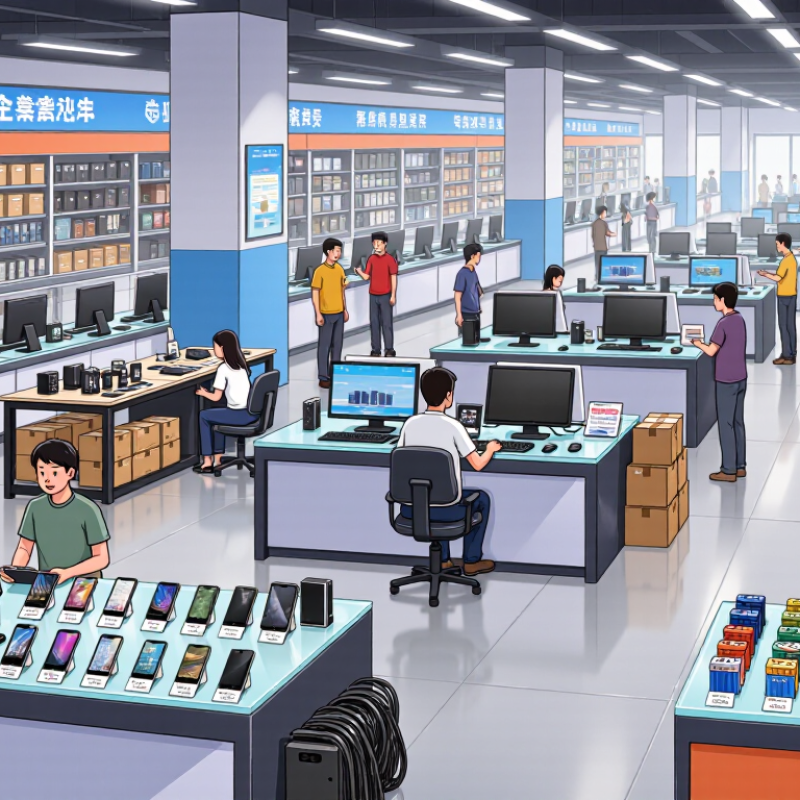
An electronics marketplace in China is more than a catalog of devices and components. It is a digital buying environment that connects overseas purchasers with manufacturers, distributors, and other suppliers. Its value depends on how clearly it supports each step, from product discovery to delivery.
Useful listings show practical details: model specifications, available quantities, customization options, and current production lead times. Buyers should also be able to request quotations, compare suppliers, and ask for samples before placing larger orders. Clear communication matters. So do payment terms, shipping arrangements, and accessible records of quality checks or relevant product documentation. That distinction matters.
A marketplace may provide supplier profiles, verification indicators, and tools for resolving order disputes, but these features do not remove the need for buyer checks. A polished listing is not proof of product quality. Even a detailed page can be stale. Confirm specifications, ask who performs inspections, and agree on how defects or delays will be handled. The strongest marketplaces make these questions easier to raise, while leaving room for careful judgment.
China Top 10 Electronics Marketplaces for Global Buyers - What Defines an Electronics Marketplace in China
An electronics marketplace is a physical or digital channel that brings multiple buyers and sellers together to discover products, compare offers, and initiate purchases or sourcing discussions. The degree of transaction support varies: some channels handle orders and payments, while others mainly provide listings, supplier introductions, or in-person access.
| No. | Marketplace format | What it offers | Common electronics categories | Typical sourcing model | Potential fit for global buyers | Buyer checks |
|---|---|---|---|---|---|---|
| 1 | General B2B wholesale marketplace | Searchable supplier and product listings across many industries, with tools for inquiries and quotation requests. | Consumer electronics, accessories, cables, power products, and basic components. | Buyers contact sellers for pricing, samples, minimum order quantities, and shipping terms. | Useful for comparing a broad range of suppliers and products remotely. | Confirm the seller’s legal identity, product specifications, sample quality, payment terms, and export experience. |
| 2 | Electronic components marketplace | Listings organized by component type, technical specifications, availability, and sometimes manufacturer part numbers. | Semiconductors, connectors, capacitors, resistors, sensors, and circuit protection components. | Requests for quotation, distributor orders, or spot purchases, depending on the seller and stock. | Can help buyers identify potential sources for prototyping, maintenance, or production needs. | Check part numbers, date codes, traceability, condition, authenticity controls, and applicable export restrictions. |
| 3 | Industrial electronics and automation marketplace | Supplier listings and sourcing channels focused on industrial equipment and technical products. | Control equipment, sensors, power supplies, motors, drives, and factory-automation components. | Quotation-led sourcing, project procurement, or distributor supply. | Relevant to equipment makers, system integrators, maintenance teams, and industrial buyers. | Verify operating ratings, interfaces, certifications, manuals, spare-parts support, and compatibility with the intended system. |
| 4 | Consumer electronics wholesale marketplace | Wholesale-oriented listings for finished devices and accessories, often with product variants and bulk pricing inquiries. | Audio products, chargers, computer peripherals, smart-home devices, and mobile accessories. | Sample approval followed by bulk purchase, private-label inquiry, or repeat wholesale orders. | May suit importers, retailers, distributors, and online sellers seeking ready-to-sell products. | Review product testing, labeling, warranty terms, packaging, battery-shipping requirements, and destination-market compliance. |
| 5 | OEM and ODM sourcing marketplace | Connects buyers with manufacturers offering custom production, product adaptation, or design and manufacturing services. | Electronic devices, circuit boards, enclosures, embedded products, and customized accessories. | Specification discussion, engineering review, samples, tooling where needed, and production orders. | Suitable for buyers developing a differentiated product or adapting an existing design for their market. | Agree on specifications, ownership of designs and tooling, quality criteria, change control, testing, and production inspection. |
| 6 | Factory and supplier directory | A searchable directory that helps buyers discover manufacturers or trading companies; it may not process transactions. | Electronics manufacturing, contract assembly, components, accessories, and related services. | Direct outreach and negotiation between buyer and supplier. | Useful for building a shortlist and conducting supplier discovery before a formal sourcing process. | Directory inclusion is not the same as an audit. Independently verify factory capability, references, ownership, and quality systems. |
| 7 | Cross-border B2B sourcing platform | Online sourcing tools designed to support international inquiries, supplier communication, and export-oriented transactions. | Components, electronic accessories, finished devices, and custom-manufactured products. | Online quotation and order discussions, with shipping and payment arrangements varying by transaction. | Can make initial supplier discovery and communication more accessible to overseas buyers. | Confirm who handles payment protection, inspection, customs paperwork, freight, dispute resolution, and applicable duties. |
| 8 | Domestic retail e-commerce marketplace | Retail-oriented listings that allow consumers or small businesses to browse and purchase individual products. | Computer peripherals, household electronics, consumer devices, and replacement accessories. | Usually item-level or small-quantity purchase through the seller or platform checkout process. | May help with product research or small-quantity testing where overseas access and delivery are supported. | Check whether overseas accounts, payment, shipping, returns, and warranty service are available for the destination country. |
| 9 | Physical electronics wholesale market | A cluster of independent stalls or shops where buyers can compare products, inspect samples, and speak with sellers in person. | Electronic components, cables, connectors, modules, tools, and small accessories. | In-person negotiation, sample purchases, and follow-up orders arranged with individual sellers. | Can be valuable for hands-on product discovery and small-lot sourcing during a visit to China. | Request written specifications and invoices; check sample consistency, component provenance, and arrangements for repeat orders. |
| 10 | Electronics trade fairs and sourcing events | Time-limited events where multiple suppliers present products, capabilities, and services in one venue. | Consumer electronics, components, manufacturing services, power products, and industrial electronics. | Face-to-face introductions followed by sample review, quotation, due diligence, and contract negotiation. | Useful for meeting several potential suppliers efficiently and discussing product requirements directly. | Verify exhibitor details independently and follow up with written specifications, quotations, and supplier checks after the event. |
These are marketplace formats and sourcing channels, not a ranked list of individual companies. Minimum order quantities, payment options, verification services, and export support differ by seller and transaction.
Related Posts
-
Top 10 Electronics Marketplace Sites for Global Buyers?
-

Unlocking Innovation: How Electronic Components Drive the Future of Technology
-

2026 How to Find Reliable Electronics Supply Worldwide?
-
China Top Passive Components Suppliers for Global Buyers
-
China Top 10 Electronic Components for Sale?
-

Why Choose an Electronics Marketplace for Global Sourcing?